Showing posts with label Oriental medicine. Show all posts

Sunday, May 14, 2017

Donguibogam Village: Gi Energy Rocks


The Donguibogam Village in Sancheong, Gyeongsangnam-do, was built in 2013 after the Donguibogam, the old 25-volume compilation of health and medical treatment, was recognized by UNESCO in 2009. The layout of the very wide "village" is divided into areas -- a kiddy area, a health and healing area, and a tiny village accommodation area with healing facilities like steam bath. 
Near the entrance to the complex. The turtle is a symbol of longevity in Korea, and a golden turtle (modern concept I think) symbolizes great wealth, value, preciousness.
A massive copy of the Donguibogam (published Western-book-style) at the entrance to the extensive grounds.
Because the Donguibogam is recognized by UNESCO, suddenly the value of the text skyrocketed! 

If I were to have a favorite person in history, it would be the court physician Heo Jun (1539-1615) who was in charge of compiling the Donguibogam, literally "Mirror of Eastern Medicine". Between the first and second Japanese invasions of the late 1500s, Heo Jun was appointed as writer of the text to guide people on the principles of health prevention and intervention, and for the next 14 years he labored on the compilation, which was finally completed in 1610 and published in 1613.

"Basking in Samseok (Three Rock) Energy"

I'm fascinated with the physician Heo Jun, and even visited the museum in Seoul dedicated to him, but actually the big attraction in visiting the Donguibogam Village was because I saw a picture of the turtle rock, the second of three rocks that are said to transmit energy to those who petition the rock(s). The turtle rock reminded me of the petroglyphs of Ulsan so I ardently wanted to come, see and learn about it, not realizing that it was (1) one of three powerful rocks for conveying energy, but (2) it is ultra modern and therefore not steeped in old tradition and gi powers.

The sign beside the "turtle rock" or Gwigamseok gave a light translation of the purpose for the gi-giving rocks -- see quotes below.

First rock: Restoring Health Seok Gyeong (Stone Mirror)

"Seok Gyeong (Stone Mirror) allows one to look directly into one's being. That is why it is believed that looking into the stone mirror takes away negative energy and restores a sense of balance. For instance, the culture and tour guide of Sancheong-gun said his sore back began to feel better when he started to visit Seok Gyeong frequently for his work. So why not pay a visit to Seok Gyeong, whether for a cure or for relaxation?"


A very impressive stone!
To gain gi-benefits from this rock, a person must stand in the recessed area and press hands flat and forehead against symbols or a stone. Technically, looking to the side breaks the flow of energy ... ...
More information and testimony about the rock.
Second rock: The Stone of Guigam aka the Stone Engraved with Virtuous Letters

"On May 2009, the Korea Tourism Organization organized a visit to Sancheong to take in the positive energy emanating from the Samseok (Three Stones) erected in Donguibogam Village. KTO President Lee also went along as a guest. Back then Lee had no connections with the organization but not for long -- he was recommended as president soon afterwards. Hundreds will testify that the rock's energy helped them get a new job, pass a test, or fulfill whatever wish they had made. In fact, many people visit the rock, either to make a wish or to express their thanks. [Lee Charm, President of the Korean Tourism Organization et al, (Gwigamseok, Stone Engraved with Virtuous Letters)]"

Gi is the life-force and the energy of vitality. In the central part of the Gwigamseok,
gi is believed to gather at the central hole and surge out.
To press one's whole body against the gi-giving stone is to absorb more of the energy emanating from the rock.
These ladies, after standing with their bodies and hands pressed against the rock for a few minutes, busily checked their energy level by making circulation circles with their middle fingers and thumbs while the friend would try to break the middle-finger-thumb connection. The ladies seemed quite proud that they had more strength after pressing themselves against the rock.
Even a little girl had a go at getting energy, after watching her elders make petitions against the rock.
Third rock: Overcoming Infertility with Positivity (Bokseokjeong, a Dish for Happiness)

"A lot of the stories involving Samseok's miracles involve blessings of childbirth. There was a civil servant working in Busan who had had no children in seven years of marriage. However, just one week after he was dispatched to Sancheong to prepare the World Traditional Medicine Fair and Festival, his wife was found to be with child. Another woman who had been infertile for ten years had a child after visiting the Samseok (Seokgyeong, Gwigamseok, and Bokseokjeong). There are many other such cases that attest to the vital energy surrounding those rocks."


Samseok: Real or Pseudo-science?

So after I posted pictures on the Samseok in the Donguibogam Village on Facebook, a brilliant friend and Korean history scholar Jihoon Suk hit my blog and called the village a pseudo-scientific hall of fame. His exact quote: 

"For me, the whole 동의보감촌 complex is nothing more than a massive pseudo-scientific hall of fame - but just a stroll of the place is at least pleasureable enough - placebo or not... 

There is no history in this complex. The entire complex was built out of a thin air in 2010 after the tremendously popular MBC TV drama, "허준", transformed the 산청군 area into a holy site of the so-called "Korean traditional medicine". Naturally, everything you see in this complex is less than 7 years old.

This particular stone [Seok Gyeong, stone mirror], probably one of the inspirations of this modern sculpture, is just a modern creation - the design is based on Korean bronze age mirrors found in archeological dig but added more modern elements...."

Korean bronze age mirror
I felt gypped after reading Jihoon's comments and said I went to the village mostly to see the Gwigamseok, which I thought was one of the most authentic parts of the complex. Jihoon's immediate response was:

"Unfortunately not [the most authentic part of the complex]. And looks like 동의보감촌 people don't say a word about its true origin to the visitors. Not many people would give a try to these "medicinal" stones if they know these things are less than 10 year old!"

I asked what clued him in about their lack of authenticity, and Jihoon replied, "I don't want to brag about myself but I do know about practically every cultural heritage sites in this country by heart, and I never have heard about this place before. The whole thing certainly wasn't there when I made a visit to the area in 2008."

_________________________________________________

For those interested in pursuing the pseudo-science complex (even if there's no gi in them, the stones really are quite impressive!)

Set out on a Healing tour to the Donguibogam Village - (the only web site you need b/c everything is linked from here!) - http://korea.stripes.com/travel/set-out-healing-tour-donguibogam-village

Tuesday, January 12, 2016

TCM and Silver Rings

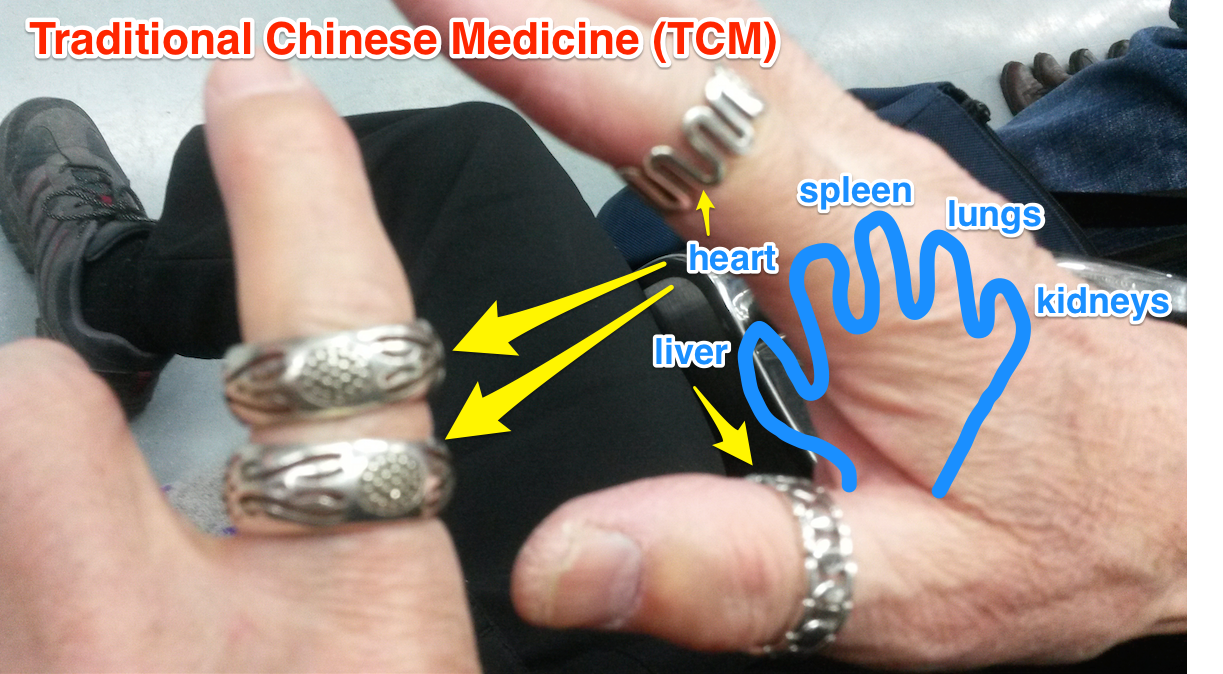
On the subway sat beside an old Korean Vietnam War vet who spoke street English and was hilariously garrulous. The guy proceeded to tell me the meaning of the station names as we passed them, and then the preventative health benefits he got from wearing silver rings in key positions on particular fingers. Unfortunately he had to get off the train before I got the meaning of his fine set of flashy silver teeth, which probably were worn for health benefits too. Anyway, the location of his silver rings were for prevention of illness and disease, beliefs stemming from hanyak which is also rooted in traditional Chinese medicine. Each finger constitutes a different organ region and he was embracing the preventative measures that silver ring-wearing on appropriate fingers could activate and enhance. He was garrulously proud of his preventative health measures! 

thumb = liver
index finger = heart
middle finger = spleen
ring finger = lungs
pinky = kidneys


OK, so looked up the health benefits of wearing silver rings, and found some more modern Western scientific beliefs:
Silver is an antimicrobial agent that aids in cold and flu prevention, wound healing, and skin care. It helps with internal heat regulation and circulation, and even when used with correct quantity (whatever that is) it provides protection agains harmful electromagnetic radiation from cellphones and other electronics.  
Basically, it has electrical and thermal conductivity; that is, it can generate an electrical field that distributes electricity and heat around the body. The positively-charged silver ions create a conductive field that reflects electromagnetic radiation away from the body, much like a mirror reflects light. Meanwhile, the field stimulates the body's existing conductivity, improves blood circulation, temperature balance, and general healing. The positively charged ions also bind to negatively charged oxygen receptors in bacteria, destabilizing their metabolic enzymes and causing them to suffocate.
For some Ayurvedic health tips on bodily uses of silver watch the YouTube clip "Health Benefits of Silver". Korean traditional medicine beliefs stem from Chinese medicine, but Ayurvedic and Chinese do share many beliefs. Some interesting Chinese medicine additions on silver are that it is connected to the moon and has yin modalities. As for its color, it is believed to stimulate calmness and tranquility, evoking reflection, coolness and space.

Tuesday, November 24, 2015

Dr. Royer: Traditional Korean Medicine

Dr. Raimund Royer, KMD, PhD, who is the Head of the International Clinic at Jasaeng Center for Alternative Medicine, gave an introductory lecture at the Itaewon Global Village Center on what is traditional Korean medicine and a bit on its efficacy.

In Korea, there are two kinds of medical therapy. One is the Western medical science called “yangbang”, and "hanbang" is for the Korean traditional medical treatment system. Similar to other Asian therapies, hanbang utilizes natural components to cure the human body. Instead of removing or focusing treatment on bad parts of the body, it tries to strengthen related organs and help the body to overcome the disease itself.

The philosophy behind Korean medicine, along with other Eastern medicines, is based on three points of view:
  • Universal view: Everything is a unique entity.
  • Nature is motion: Motion is change; motion is qi.
  • Nature is interrelated: Everything is somehow related to everything else.
Source
The five elements reflect on aspects of the whole body, and when the elements are in balance, the yin and yang of the body are also well balanced with the overall outcome being a body filled with the vitality of the elements in good flow and circulation and therefore being in a state of good health.


The above picture might suggest that traditional Korean medicine is simplistic, when in actuality it is a complicated system of yin and yang, ebb and flow, 27 pulses, and a whole lot more. A chart characterizing the normal relations between the five elements is below. [Click to enlarge]


WOOD - yang power
  • Beginning, like in spring when sprouts break through the soil, and new life comes into existence.
  • Strong upward and spreading character
  • Viscera: liver -- birth, spring, wind, tendon, eye, anger
FIRE - yang power
  • The yang energy reaches the extreme, as in nature, flowers bloom.
  • Heat 
  • Viscera: heart -- spirit, blood vessels, tongue, joy
EARTH - yin and yang power
  • Earth harmonizes with wood, fire, metal and water.
  • In the circle spectrum, earth holds center position and has energy to change and transform external growth into internal maturity.
  • Viscera: spleen/pancreas -- digestive tract, energy supply for whole body, flesh, lips, thinking
METAL - yin power
  • Solid and cold
  • Growth of spring and summer stops, fruits ripen
  • Dispose of unnecessary things
  • Viscera: lungs -- respiration, skin, nose, voice, sadness/grief
WATER - yin power
  • Cold and icy
  • Water stores all energy and essences and prepares for new spring
  • Mostly yin character but contains yang energy too for preparing for spring
  • Viscera: kidneys -- storage of vital essence, vitality, bones, ear, hair, sexuality, fear

Qi (Vital Energy) and Meridians
  • Basic energy element that constitutes the cosmos
  • Produces everything in the world through its movements, changes and transformations
  • In the human body, the refined nutritive substance that flows within the human body
  • Circulates in a circuitry system much like the Seoul subway lines; the system connects organs, extremities and all tissue.
  • Accu-point - Certain point along a meridian that strongly responds to stimulation; considered as a reservoir of qi with high therapeutic response.

Deficiencies

Qi deficiency
Fatigue and low energy
Sweating even without exercising
Weak pulse
Hernia
Blood deficiency
Pale face, lips and nails
Light-headedness, tinnitus, palpitation
Irregular periods, reduced flow, in severe cases no menstruation
Yin deficiency
Weight loss, dry mouth, dry skin, tinnitus
Dizziness, palpitations, anxiety, sleeping disorder
Night sweating
Sexual dysfunction
Yang deficiency
Feels cold
Cold feeling in lower back and knees
Weak in legs with walking problems
Diarrhea, frequent urination
Low sexual function
Principle of holistic medicine

The human body possesses innate recuperative power so treatment is to (1) promote individual health via the treatment of organic dysfunction, and (2) harmonize the mental state and social relationships.

Herbal Medicine

The basic idea is that each plant, mineral, etc. has certain characteristics and energetic properties
Example: Ginseng
  • Qi-tonifying medicinal with over 200 active chemical substances
  • Flavor - sweet, bitter
  • Qi - warm
  • Meridian/organ entry - spleen/pancreas, lungs, heart
  • Effect - dispels fatigue, sexual dysfunction, digestive problems, anxiety
In using herbal medicine, the recipe consists of different herbs as based on each individual's needs. The 8 main therapeutic purposes for using herbals are:
  1. Perspiration - induces sweating
  2. Emetic - induces vomiting
  3. Purgative - promotes defecation
  4. Harmonization - balancing
  5. Warming - supports yang energy
  6. Heat-clearing - reduces internal heat
  7. Tonifying - treats qi, blood, yin and yang deficiencies
  8. Resolving - dispenses sores, ulcers, etc. 
Bee venom therapy, for strong anti-inflammatory pain relief and for strengthening the immune system, is also used. Pharmacopuncture also figures into traditional Korean medicine and is used for pain control and supporting muscles/ligaments along the spine.

Dr Royer checking the pulse -- three pulses on the left wrist and three more on the right.
Each pulse corresponds to a different organ.

Saturday, April 26, 2014

Performers in Modern Day Society

Adam Glassman, a recent graduate of Grinnell College where he studied Theatre and Dance, gave an impressive presentation on "Traditions through Change: The Role of Performance in Modern Society". His focus in theater is as a director, and his work mainly deals with ending the audience-performs relationship barrier and further studying the consciousness shifting for creating new rituals to reflect life in modern society. He has spent time traveling and learning shamanic and modern performance techniques in countries like India, Tibet and Japan, among others. With his research efforts in South Korea, he hopes to fuse lessons learned from different training methods and lifestyles to create a new type of modern performer.

Abstract of his presentation:

"South Korea stands as a country where digital billboards and cutting edge technology exist side by side with an emerging break dancing movement, a massive market for Broadway productions as well as ancient shamanic rituals. Whereas many nations stamp out such parts of society in an attempt to become 'modern', South Korea has taken a unique path where performance and face-to-face interaction remains an everyday part of society. In my project I work, train and, at times, live with these dancers, performers and shaman (called mudang) to learn what the role of the performer is in South Korean society and why performance has remained so integral to Korean life. I will recount my experiences of staying and living with mudang, training with K-pop choreographers, and share interviews with arts administrators from different parts of Seoul. By taking a broad and immersive approach to the project, I can draw similarities and recurring themes that define the way performance and live action define South Korean life. In turn, I hope to take these lessons and training methods back to the United States to create a new method of training and a new style of performance. Basing many of my new ideas off of the shamanic gut (Korean mudang rituals often translated loosely as exorcism), I hope to discover how live performance does more for us than entertain, and further hope to define the true role and need for the performer in modern society."

Why Korea?

Korea has a very unique history of theater, particularly in regard to three aspects: stage, actors and audience. Traditionally performances were held on unusual stages, or rather arenas or in streets, in houses, yards or at seasides. The stages were not elevated to be above the audience but to be on the same plane with the audience because the performers, who also functioned as actors, interacted with the audience and the audience was expected to talk, dance, even shout in ardent interactions with the performer-actors. The separation of the audience and performers by a barrier didn't in fact take place in Korea until the Japanese colonial period when the Japanese sought to use the performers to relate propaganda to the audience while curbing the spontaneity and interaction between the traveling performer-actors, who could also be delivering information to the audience.

Another reason Adam Glassman desired to do research in Korea is to take a closer look at the unique style of shamanism practiced in South Korea. There are many shamans in the country, and they are not in many regards respected but then they are not ostracized or vilified either. While scientific studies have greatly reduced the amount of beliefs in spiritualism and superstitions in Korea, businessmen still seek out mudang for good luck ceremonies in their private businesses, mothers still buy Buddhist talismans wishing luck for their children to pass exams, and housewives still pay for over-the-mantel "prayer" papers ensuring health in new homes and hanging bamboo on the northern walls to fend off evil which is believed to come from that direction. In fact, more than 40,000 shamans are registered in Korea although it is believed that the number is much higher for many shaman have not registered for whatever reason.

Curiously, the mudang are categorized as cultural treasures. Although many people believe the mudang inhibit the firm step into modernism, the government has declared them as national heritages, and especially so since many government officials go to them for beneficial ceremonies themselves.

Source
Unlike other dance performances in other countries, in the Korean traditional ceremonies and shamanic performance conducted by the mudang, the audience is always present. The performance of the mudang is to empty one's self from their body and become a vessel for a "ghost". They dance around and do odd actions. A drummer drums for hours before a possession and ritualistic clothing and symbols are worn or waved around to entice and invite the spirits. The concept of "mu" is the idea of a collective Korean subconsciousness and has heavy connotations. The idea of facilitate or "punryuu" is apparent, and the drumming and dancing facilitate the invisible connection that happens when people meet, and this is the main goal and interaction of the mudang, to let the individual and the spirit world meet. For this reason, business owners are the main patrons of mudang as the businessmen need their businesses purified of evil presence, and the mudang dancing and interacting with the spirit world accompanied by the incessant drumming clear the evil spirits and are thought to revitalize the business. During the gut, something amazing happens which proves the presence of the spirits and during the dancing that channels the sprites, a lot of improvision happens under "possession".

Other kinds of performances

Talchu or Korean mask dance. Again, this is a communal performance, and audience and the performers have moments when they dance together. The dancing is spontaneous and non-choreographed, and as everyone dances together, it's like sharing one large group hug. Everyone feels kind of healed at the end of the performance and even the gods are happy.


Nanta is a South Korean comedy cooking show that employs samulnori or farmer dance rhythms. The mostly non-verbal performance has been taken to 18 countries and even enjoyed a year (2004-2005) in an off Broadway show. It still runs in Korea, and three theaters on mainland South Korea and one theater in Jeju hold the performance even today. Most Koreans, mainly because of its international popularity which has increased its domestic popularity, know of or have seen this performance. Even though its stage is non-traditional and the actors perform on an elevated stage, the audience is still expected to interact in not only words, even those lustily shouted, but some members of the audience are dragged onto the stage to be an actual part of the performance. Nanta is a modern-day show that creates communal excitement and interaction, and so this unusual South Korean performance is an eclectic blend of a modern stage but with the Korean concept of highly charged actors who perform as well as interact with the audience.


The street dance movement is taking off in South Korea. Unlike North and South America and other countries that have a history of street dancing, Korea cannot boast of such a history. However, Koreans are embracing the movement and are very good in their performances. Similar to Korean traditional street performances, street dancing and break dancing are performed with a lot of communal interactions. The audience is not sitting but standing and gathering around, watching, cheering, and even members of the audience challenging the performers and showing their own alternative moves.


Case Study: Living with a Mudang

Adam for a time lived with a mudang. Most mudang are women, especially in the more traditional society; however, in these modern times, more men have entered the "profession" and for several months Adam lived with and studied under Gum-gang, a male shaman who didn't only practice shamanic rituals but also prescribed and brewed traditional medicines and practiced traditional healing rituals.

Some traditional medicines Adam learned about were that homemade remedies with persimmon help alleviate diarrhea, plum juice clears cold and kills soar throat, while sujunggwa (a cinnamon blended drink) helps with blood flow, circulation and clears the sinuses. He learned about hyol cheol'li or the death points in the body (a total of 24). By massaging them ki or energy can be released, but hitting them really hard could cause unconsciousness or even death.

Two examples Adam shared concerned himself and his regard of the legitimacy of the mudang as a viable practitioner of medicine concerned accupressure that the shaman performed on Adam. The mudang was demonstrating deep-massage techniques to Adam on various parts of the body and hit on a tiny spot that hurt Adam severely between his toes. The shaman informed Adam that the spot revealed that Adam had been drinking a lot the previous day, which was true. Another more meaningful revelation using accupressure was on another day when the shaman hit a spot the size of a tiny pin head that was extremely painful to Adam. Again the shaman had an explanation; he said that Adam had been overweight as a child, again it was true but this time Adam was very amazed because the shaman could not have known in any way that Adam had fought obesity as a child and teenager.

What Adam learned from his time with the mudang is that shamans are friends, guides, mentors, counselors and care-givers. They have many roles, but the majority of them employ a familiar interaction with the people they seek to heal, be it through a gut ceremony, medicines or therapy healings or in any other interaction. This time taught him that shamans ... as well as the performers in Nanta, street dances, etc in Korea ... reach out to people and "help" them, improve their conditions, and by giving something of themselves to people they are creating a better and more cohesive community because they invoke a kind of metaphysical healing to society.

A quote from Oh Tae'Sok, one of Korea's most popular theatrical writers:

"Our theatrical traditions never had any fixed forms, as do Japan's noh and kabuki theaters. In Japan the performer enters the structure of a form at an early age and then moves on to develop his own artistry in it. Well, then, why don't we have such forms? Wouldn't it have been nice if we had a similarly formalized tradition? But listen to Korean music and its changdan (rhythmic patterns). It never keeps the same beat. Our tradition has always avoided set forms. It has descended to us not in a fixed-sate, but in an ever-flowing fashion. Our tradition has grown spontaneously. It constantly changes, reflecting current situations because it is innately fluid." Oh Tae'Sok

Wednesday, September 19, 2012

Yin & Yang of 6 Medicinals

When Chinese, Koreans and many people of Asia, who have beliefs in hot and cold theories, are treating ailments and diseases, they first must understand the body constitution of the patient.


To know the body type, evaluating the physique, studying the diet with preferred foods and preferred temperatures of foods when eating, taking the pulse, and a few more points are taken into collective consideration before a body type "diagnosis" is pronounced. To be specific, there are 2 yang or warm body types (a greater and a lesser) and there are 2 yin or cool body types (again, a greater and a lesser). Only when the correct body type is ascertained can medicinals be prescribed.

3 Warm Herbs / Medicinals (Yang 陽)

Ginseng - Ginseng is used to reduce stress, improve the digestive function, reduce fatigue, fight against colds and infections; mountain or wild ginseng is seen as far better than cultivated ginseng and the price in the thousands of dollars that a single wild ginseng plant brings in reflects this belief. A caution, however, for people wanting this cure-all is that people with dominating yang should avoid the plant, or their body balance will be blown with excessive heat.

Velvet Deer Antler - Deer antlers in the velvet are another warm medicinal with a more than 2000 year old medicinal history. Deer antlers commonly figure in medicinal compotes as they supposedly relieve arthritis pain, inflammation, support joints and improve blood circulation. They are pretty much viewed as enhancing the entire immune system. A caution when using deer antlers as a medicinal is to avoid alcohol.

Caterpillar Fungus (동춘화초) - Caterpillar fungus is one of the many fungi in Asia that has medicinal healing factors. This particular kind of fungi is believed to protect against lung and kidney problems, and also to help in the prevention of cancer. Cautions for this are unknown.


Cool Herbs / Medicinals (Yin 陰)

Adlay also known as Job's Tear (율무) - Adlay is a gluten-free grain not commonly cultivated in Korea or until recently enjoyed as a grain. It predominantly figures in the sweetened instant drink 율무차. Adlay is believed to be good for the metabolism and promotes good blood circulation. Recently it has taken on the extra meaning of being beneficial for dieting and weight loss. There are two cautions for this grain. People who have cool constitutions are very much affected by the cooling affects of this grain. Likewise, preganant women should avoid as it "cools" the blood which affects the fetus.

Mung Beans (녹두) - Mung beans are believed to be very beneficial for detoxing the body and improving urination. They also help sick individuals recovery their health and improve the actions of the organs in the body. Mung beans are not to be taken with chemical medicines as through interaction they may reduce the effects of the intended treatment outcome.

Gardenia Seeds (치자) - Gardenia seeds are a cooling "herb" for reducing an internal fever, and according to the 동귀보감 they are especially helpful for improving liver function. A secondary outcome when taking them is the lowering of one's blood pressure. They also can help depression and soothe blood shot eyes. The only mentioned caution for gardenia seeds is the likelihood of a diarrhea.


This interesting piece of research was done by my students Doyoung Lee and Sojung Oh. Although there are sooooo many types of yang and yin medicinals, the students prefaced their presentation with choosing six, three from both of the yin and yang categories, to explain to the audience for tips on how to improve their own or their family members' health.

Friday, December 2, 2011

Differences of Tang in the Far East

As many things in the Far East have originated in China, it is believed that what is known as tang today also did originate on the northeast Asian mainland in what is now China and Mongolia. Tang does not translate directly into English but can be called soup although it is usually more like a hearty stew. The 'soup' of China originated as a simple bowl of food cooked with a few ingredients, thus, 湯 (tang). Varieties existed and they were distinguished as 臛(hak), a soup with only meat, and 羹(gaeng), a soup with only vegies. And then the Mongols had their soup called шөл (schule), with the main ingredient being meat, either that of goat or sheep.

Three cultural recipes for tang

Chinese tang in the present day has many ingredients. Tang in China is also a medicine, and Korea has borrowed both tang as soup and tang as Korean medicine.

In Korea, tang (the soup) is differentiated by its water content. For a thin soup with 70% or more water the soup is referred to as 국 (gook), with between 50-70% water a soup in Korea is typically called 찌개 (jjigae), and with less than 50% water the soup-stew is called 전골 (jeongol). There are more than 200 kinds of tang in Korea and with a wide range of meats, vegies and spices (red peppers and garlic are almost always guaranteed).

Japanese tang has a light and bland taste compared to that of Korea's. The broth base is from seafood, various kelps and bonito, as culturally Japanese did not eat red meats. That of course is changing but Japan, as an island country, is still very culturally dependent on the sea for providing much of the food and many seasonings.

Tang embued with cultural meaning

Though tang exists in the three Far North-eastern cultures, eating tang reveals hidden cultural meanings. For Korea, people eat tang together in order to grow closer. This was more true two decades ago when two people shared the same bowl, but even nowadays with people each eating from their own soup bowl, the very act of eating the same kind of food is bonding. In Japan, however, eating tang together is a subtle way of saying that the people are already close. This might be due to the fact that Japanese do not eat out as much as Koreans, who might eat every meal out in this fast modern age. In China, here doesn't seem to be a special meaning attached to the eating of tang together.

As for how tang is served, in Korea it is the main dish of the meal served with a bowl of rice while in Japan it is one of the many light dishes served with a bowl of rice. China considers tang a kind of sub-food, just an accompaniment to a meal to be eaten last. Koreans very often tip their rice bowl into the tang and eat them mixed together, and for the westerner to do so brings smiles to Koreans faces, who might joyfully say, "Ah, you eat your tang like a Korean." Even if they don't tip the rice into the bowl, scooping a spoon of rice and dipping it in the tang is common. For the Japanese, however, tang and rice are eaten separately, spoon by spoon; and yet, a couple eating together would eat the tang and rice together to show that they are a couple. Wow, table manners telling tales on people beknownst or unbeknownst to them!

Tang : 감자탕 (pork bone soup)


Guk : 재첩국 (small shellfish soup)


Jjigae : 두부찌개 (Korean tofu stew)


Jeongol : 해물전골 (seafood jeongol)


This presentation by my students Kim Seong Hoon and Kim Jeong Seop was concluded with pictures of them eating some noodle tang and slurping the noodles happily! And by the way, slurping noodles is only now being considered bad manners (as influenced by western culture that dislikes noisily eating food). Traditionally in Korea, to slurp noodles was to show deep appreciation for the food and was an indirect compliment to the cook.

Thursday, November 3, 2011

Oriental Raisin Tree (헛개나무)

My friend, Yoon, and I have been doing cultural sharing on healing herbs and practices in our native countries. I'm fascinated with the oriental herbs and the huge herb markets displaying bursting bags and baskets of musty smelling barks and roots that the older generations oggle and haggle over. Wandering the herb markets is a delight for me, but I'm not satisfied with just the visual culture ... I want to KNOW the beliefs behind them!

On the 헛게나무 or Oriental Raisin Tree

The 헛개나무 is common to oriental medicine, referred to in Korea as 한의약 (Korean medicine), and so it is readily available in herb and open air markets and in the 5-day markets which specialize in medicinals. Probably the biggest reason for its popularity is due to the huge drinking culture in Korea. With so much indigestion, stomach upset and malaise from binge drinking, the boiled pulp and bark of the 헛개나무 ease hangovers and detox the liver. It is believed to be great for alcoholics and particularly helpful for treating the fatty liver.

To make the post-alcohol detox drink, add 50 grams of sliced 헛개나무 to 2 liters of water and bring to a boil. Once it begins to boil, turn the heat down and simmer the liquid for 2 hours with the lid opened or removed (for releasing toxins). After the liquid has been simmered for 2 hours, it is ready to drink. Though drinking it hot or cold effects the body the same, most people prefer to drink the liquid chilled and as if it were water, that is, throughout the day. There doesn't seem to be any limit on how much a person can consume in a day but my gut feeling parallels the cliche "too much of a good thing" isn't good. The woody plant can be boiled several times for extracting the healing properties, but 2 or 3 times at the very least.

The 헛개나무 is also believed to be great for releasing stress, lowering high blood pressure, counteracting jaundice, constipation and diabetes. As already said, it is great for the hangover and upset stomach so marketing, to exploit this belief, has happily created a 헛개나무 yogurt. Older people also use it when boiling meat in order to "clean up" the meat and remove bad tastes and toxins. Even the fruit of the 헛개나무 has its purpose -- it is used in Oriental medicine, particularly when doing acupunture (although Yoon wasn't certain exactly how).


The web is filled with places to purchase 헛개나무, the fruit, the bark (pictured above), the leaf. Of course it's available through GMarket -- hey, what isn't?! But because of its popularity in the Korean culture, there is even a market that specializes in the woody plant: http://hutgenamu.com. This site markets the domesticated plant substances, the really wild plant substances -- 헛개나무 껍질, the skin/bark of the tree, which is marketed at ₩50,000/kg -- and even the 헛개나무 얼매 or fruit of the tree, which sells at ₩130,000/60 fruit juice packets.

Sunday, October 23, 2011

Sunday at the Riverside

Spring and fall when the weather is bright and sunny, the riverside is swarming with people, especially on weekends. This Sunday was gorgeous after a slightly chilly spell so the riverside wasn't as packed, but it certainly was filled with entertaining activities for people to watch or participate in!

Bee-sting Therapy

Many times through the spring, summer and now the fall I've seen middle-aged and elderly people collecting bees. I'm passionately interested about the therapy used, how to do it, how effective and so many questions. Most people haven't talked with me - some because maybe they didn't want to, but others seem to feel that the foreigner just won't understand. Today this gentleman was really helpful and informative. Yeah, I certainly didn't understand everything and he wasn't very talkative but he sure did give me a lot of info about his collecting method which he feels is superior to others. [I agree. Others have used tweezers to snatch bees badly damaging the ones they catch as well as the very high percentage that gets away; others have places a baggy over the flower and bee and shook the bee to the bottom of the deep baggy where others were balled up, of course injuring the bees with all the rough shaking and them being compressed in such a small tight hot space; others use bottles but none as confidently or gently as this guy!]


He uses sugar cubes stuck inside the plastic water bottle so that caught bees won't get hurt or want to fly out when he's trying to grab others. Small holes allow ventilation and he doesn't bang the bees around and injure them, because he's collecting them for therapy, bee-sting therapy. He tries to get at least 25 stings for effective therapy. I didn't understand what the problem he was exactly treating but rheumtism and "places where people ache" seem to cover it. My friend in the states who has fibromyalgia says the beestring therapy she tried was somewhat helpful, but I've never talked with anyone in Korea who has explained more about the therapy on a deeper level, and where the idea and treatment came from. It's certainly another fascinating aspect of either traditional Chinese or Korean medicine!

Drum Concert

Events like picnic fundraisers, concerts and competitions are held at one of the many riverside park areas. Today there was a rousing drum concert with precision repercussion power rolling from the throats of the drums. Absolutely loved it! I think it was for a fund-raiser for perhaps physically and mentally handicapped youth and their families. Many young people with evidence of cerebral palsy, Mongoloidism, and other disabilities were swarming the area with care-givers, volunteers and family in attendance. The drum concert was one of the beginning events held and other musical events followed. Food tents were set up busting with people preparing hot "picnic foods" over bunsen burners.


[Kimbap boxes made early in the morning by some small company used to be the traditional picnic food but now people actually bring in cooking equipment and make hot food. Kimbap is not so commonly seen anymore as street food either ... and I really miss it. But according to my friends, cheap oils are used in making kimbap so people shouldn't eat it. And my thoughts, and cheap oils at high temperatures aren't used for making the now ubiquitous and very fattening fried street foods? Or white bread colored with caramel coloring is better for you than rice? I don't get it. Why spurn what one knows for something unknown but which tastes better, but in the long run will do a lot more harm to the body? Sigh.]

Kite Flying

Kite flying offers surprising constrasts in Korea. In the US children like playing with kites in the summer. However, in Korea children do like playing with kites but this has been traditionally a winter sport. With the right winds blowing on cold winter days making a blue cloudless sky, the wind and sky were perfect for enticing a colorful display of kites high. Also traditionally there were kite fights, but I'm not sure in what period they took place, which ethnic group introduced them or whether they originated in Korea. But what did take place traditionally long ago in Korea was a special kite flying on Lunar New Year's day. Children would fly kites in the sky, make a wish and then cut their kite strings to release their kite, aka wish, in hopes of having their wish be realized. I've heard that this tradition was causing a lot of kite trash around [much like releasing balloons in the atmosphere] so the government put a stop to it. As best as I can tell, this tradition stopped sometime in the 1980s.

Anyway, kite flying has become an activity for elderly men, and today there were three out flying their kites. There was also a father teaching his little girl how to fly a simple kite, but he sure seemed more interested in flying it than she. She quickly lost interest because she couldn't get it up in the air, not surprising since the elderly pros were really struggling too. What I love about these picts is the string cradle that Koreans use for easily spinning to allow quick soaring flights or to harness in a falling kite. Korea is famous for their kite skills and kite making is something that all Korean children learn in kindergarten and elementary school, kite making with kites that look like the Korean flag. Even festivals frequently offer this as a craft option.


Korean Croquet

I wish I knew the name of this "sport" but it definitely looks like croquet until you watch for a couple of minutes, then you begin to wonder why players sometimes overlap playing time, seem to hit more than they should, and the way they play in teams is REALLY confusing. However, this is definitely an old people's game. I have never, ever seen anyone under 50 playing. Women do enjoy it, but men thrive on it and play pretty much in all four seasons. For that reason, all along the long riverside bike trails is a quite occasion croquet court. The courts usually appear in areas near large apartment complexes, and they get a lot of grooming to maintain their flat, unscuffed appearance. There's one particular court where a gentleman plays and thinks I should hit the ball for "experience". I never have because I plainly don't understand their rules; they're different than how I learned croquet, and if I'm going to hit the ball, I'm going to play a whole game ... maybe not skillfully, but knowledgeable at least.


Car Racing

Racing remote control cars is the latest craze along the riverside. Old and young alike line up in droves to watch people "drive" their remote cars around and around and around and around in circles. Hypnotizing indeed! The cars aren't racing really; they're just going around, making maneuvers, and sometimes jumping. Nothing exciting but crowds get attracted. I have to smile. People go to the riverside for exercise, but this is the most sedentary activity here ... and with lots of people doing it - nothing!


Playing ball and Fishing for ball

Loads and loads of guys make teams and play ball, or vigorously practice solo shots. Really blood pumping workouts! Well, today another ball bounced into the dirty river, and one of the local fishermen was recruited to help. That fisherman was good at throwing his line just on the other side of the ball, but the slight current was pulling the ball away and eventually the poor fisherman had to admit defeat ... and another ball now bobs in the middle of the river. It just wouldn't be Sunday without adding at least one ball to the river!

Sunday, December 20, 2009

Herb Medicine Museum

The weather is bitterly cold but still I must walk to keep at bay the pinched nerves in my back and neck. Walk and freeze, walk and freeze. Was walking near Chegi-dong and remembered there was an herb museum that I had been meaning to visit ... didn't figure any of it was in English (and I was right) but needed to escape the brutal wind. I went inside and the elderly woman greeting the rare visitor grabbed my cold hands and warmed them as she led me to the entrance of the museum .... whereupon I was greeted by an elderly man who escorted me throughout the museum, all the while telling me in Korean, "I'm sorry I don't speak English" while I'm telling him "I'm sorry I need to study more". Ah, he was wonderful as he showed me what he thought I needed to know and as, when I had a question, he would zigzag me through the museum to a display that would visually explain more about my question which he furthered with a simplified explanation ... interspersed with Japanese! [Japanese is the language for group tourism now but he probably learned some in elementary school during colonial times.]

Heo Jun and the Donguibogam
Heo Jun (1539-1615), a royal doctor, is believed to be a father of Korean herbal/traditional medicine. He was commissioned by King Seonjo (1552-1608, Chosun's 14th monarch) to compile the traditional medical philosophies and treatments of East Asia of the time. His 25-volume compilation, Donguibogam, is based on some 80 Chinese medical books and took 10 years to compile; it then took another 3 years to engrave in wood blocks for printing and distribution purposes. The Donguibogam is divided into 5 categories: (1) internal diseases, (2) external diseases and somatology, (3) miscellaneous diseases in gynecology and pediatrics, (4) medicinal decoction [extracting chemicals from mostly plants through boiling], and (5) acupuncture (the body is charted as having 365 points for specific acupucture treatments!). While a vast majority is very enlightening on a very advanced medical system, some of the medical beliefs are certainly to be questioned in modern medicine - examples being, "becoming invisible", "how to see ghosts" and "how to change a fetus from a girl to a boy". There is one, however, I think I must try to alleviate my pinched nerves in my back and neck: "Stiffness of the neck, front or back, is often caused by humidity in the body. A Chinese quince is effective when you cannot move your neck due to tensed muscles."

The Donguibogam was designated in 1991 as Korean's National Treasure #1,085 and as of 2009 the Donguibogam has been accepted as another (Korea's eighth) of UNESCO's Memory of the World Registers. To understand about Heo Jun and his Donguibogam is important for understanding the purpose of the museum.

The Museum Itself
Because Heo Jun is instrumental for starting the theories of body types and what those bodies can eat, the human body has been classified into 4 categories: the taeyangin, soyangin, taeeunmin, and soeunmin. To understand a person's type, the body shape, skills and talents, constant state of mind, personality, mental desires and food affinities must be taken into consideration. The elderly man was a bit surprised I knew about this and asked me what my type was - I told him I THOUGHT I was was a soyangin but didn't know. He showed me a display but there are too many considerations for me to self-diagnose myself accurately. That said, however, according to a traditional medical doctor, nowadays with globalization and access to forces outside the traditional environment, it is very hard if not impossible to accurately categorize people now on the 4 sasang constitutional types.

Inside the museum are huge displays of plant products - 760+ - that have been identified for use in Korean medicinal therapies. Also are minerals and animal products of a much lower count. I noticed there was black rhino horn in one of the displays and that was an item that was very precious but had to be transported across continents to procure. Next to it was a bear's gall bladder, an item that is still used. Even now in Korea are bear farms where bears are caged with ducts put in their gall bladders to drain them; the bile from the gall bladder is very expensive and is regarded as a great restorative. I also asked about tiger parts (hearts, etc) but the elderly man said there were no tiger parts in this museum; when I asked again, he said there were no tiger parts used in medicinal therapies, but I have read about tigers as having great medicinal value, inspiring valor and bravery in men and having superior healing qualities. Anyway, tiger parts were nonexistent in this museum.

The wild ginseng display caught my attention. Wild mountain ginseng was contrasted with Chinese ginseng, domesticated ginseng and one other type. The wild (Korean) mountain ginseng was guestimated to be valued at around $5,000 and it was just a tiny little root! Seeing the ginseng led me to ask about the simmani, the people who petitioned the gods of the mountains for ginseng and prepared their minds and bodies for several days before going up the mountain in search of the wild ginseng. The man took me over to another display of people petitioning the gods of nature as they gathered their medicinal herbs from the mountain for healing their human ailments. The man thinks that the simmani still exist but not as devout mountain petitioners of former times.