Showing posts with label books. Show all posts

Wednesday, December 25, 2019

Songs of the Dragons

Songs of the Dragons Flying to Heaven, translated by James Hoyt (1979), was a compilation of 125 cantos compiled to establish the legitimacy of King Sejong's lineage. King Sejong (1397-1450), 4th king of the Joseon Dynasty (1392-1910) ordered the compilation to extol the merits of the Yi (Lee) lineage in the new dynasty, and printed the compilation with the newly-made hangeul script made for all people of the nation to easily read. Songs of the Dragons was the first book to be printed in Sejong's new "alphabet".  


Three Reasons for the Compilation

(1) Extolling the great accomplishments of the six generation of founders of the new Yi, or Chosun/Joseon Dynasty. The heroic actions of the Six Ancestors are compared to the flights of dragons symbolic of the throne, hence the title of the work. Of the Six Ancestors, only two actually sat on the throne of Korea. The other four generations of the House, preceding the establishment of the dynasty, are designated as chamnyong, or "submerged dragons," and their residences as chamjo, or "submerged palaces," after Chinese usage. [When Yi Seong-gye took the throne, he had to justify through ancestry that he was eligible for the throne. Ancestry was of need traceable back by at least four generations; thus, when Yi Seong-gye established his Dynasty, he brought with him the bones of his four primary ancestors.]
  • The ancestors of the Yi family lived in Jeonju, Jeolla-do, and their prominence dates from Mokcho (Yi An-sa, d. 1274), the First Ancestor, who served the Goryeo Dynasty (918-1392) in various capacities in a number of provinces. Mokcho's descendant in the fourth generation, Yi Seong-gye, became King Taejo, the founder of the Yi Dynasty after overthrowing the Goryeo Dynasty.
  • The Second Ancestor, Ikcho (Yi Haeng-ni), was noted for his difficulties with the Jurchen tribesmen in the North.
  • The Third Ancestor, Tojo (Yi Ch'un, e. 1342), a skillful bowman.
  • The Fourth Ancestor, Hwanjo (Yi Cha-ch'un, 1315-1361), based the growing power of his family on the imminent collapse of the Mongol empire in China (1368) and the concomitant weakening of the Mongolized dynasty of Korea.
  • The Fifth Ancestor, Taejo (Yi Seong-gye, 1335-1408), wielding military power as a result of his expeditions against both the Jurchen tribesmen and Japanese freebooters and for espousing a program of land reform and alliance with the Ming, he established himself as king and ruled until his abdication in 1398.
  • Chongjo, an ineffectual son of Taejo and who was a caretaker-king during a period of rivalry over succession (1399-1400), does not merit qualification to be listed as one of the Ancestors of the dynasty.
  • The Sixth Ancestor, Taejong (1401-1418), completed the work of establishing a firm dynasty, which would last until 1910.
First four kings of the Yi/Lee Dynasty / Joseon Dynasty:
  1.   Fifth Ancestor: Taejo (r. 1392-1398)
  2.   Jeongjong (1398-1400)
  3.   Sixth Ancestor: Taejong (1400-1418)
  4.   The Great King Sejong (1418-1450)

(2) Providing inspiration for King Sejong and subsequent kings on the Yi line by recalling the vicissitudes and tenacity of the Six Ancestors. No less than 15 of the 125 cantos end with the hortatory refrain, "Let Your Majesty not forget this!"

(3) Proclaiming to the world that the accession of the Yi family to power was in accordance with the Chinese concept of the Mandate of Heaven. This concept of the Mandate of Heaven is an ancient one, formulated by Tun Chung-shu (2nd century BC), who declared that when a ruler commits unjust acts, Heaven shows its displeasure by such calamities as earthquakes, famines, and floods. If these warnings are not heeded, Heaven seeks to admonish rulers by means of such portents as eclipses and comets. If these are not needed, the ruler loses the Mandate, and Heaven selects another to mount the throne. The attainment of the Mandate of Heaven's divine plan is the much repeated theme of Songs of the Dragons Flying to Heaven, and the word "Heaven" in the title refers to Heavenly favors bestowed upon the six heroes. The writing of the work is, in short, a written legitimization of the Yi rule.

CONTENTS

All of the cantos are focused on the assertion that the Six Ancestors have the favor of Heaven. The earlier cantos speak of the exploits of the first four Ancestors, aiming to support the Fifth Ancestor Taejo, who took the throne. The cantos XXVII to XCV (68 or 54% of the cantos!) were of the exploits of King Taejo, how mighty he was and how he repeatedly saved the country through his valorous deeds in battle or in the hunt. No cantos were given to Jeongjong (1398-1400), the ineffectual son of Taejo who ruled briefly during a period of political instability and fighting for the throne. Cantos XCVII to CIX (13 cantos) were dedicated to the Sixth Ancestor, Taejong (1400-1418). Those 13 cantos primarily reflected the time of instability and mostly sang of assassination plots and recognition of loyalty. Cantos CX to the end of the songs, Canto CXXV, sang of the merits and righteousness of the Great King Sejong, the Sixth Ancestor. These cantos were a series of admonishments. Admonishments:
  • to not forget the hardships of his Ancestors and to be steadfast in purpose
  • to not forget the contrast between the magnificence of his palace and the crudeness of his Ancestor's shelter
  • to not forget the contrast of his embroidered belt of office with the crude armor of his Ancestors
  • to not forget his Ancestor's hunger as he dines of the finest of food and richest of drinks
  • to not forget his Ancestor's fierce battles as he presides over a brilliant and peaceful court
  • to rule with clemency, an important quality of kingship
  • to have compassion
  • to be humble lest he become a tool of conniving ministers
  • to act in a manner befitting a king
  • to overcome with benevolence the plot of evil ones
  • to maintain a strong economic basis for the state
  • to be forgiving to his advisors as was Taejong
  • to respect scholarship and beware of trouble-makers
  • to evade slander mongers and those who embroider the truth
  • to despise Buddhism and revere Confucianism
  • to emulate the Flying Dragons
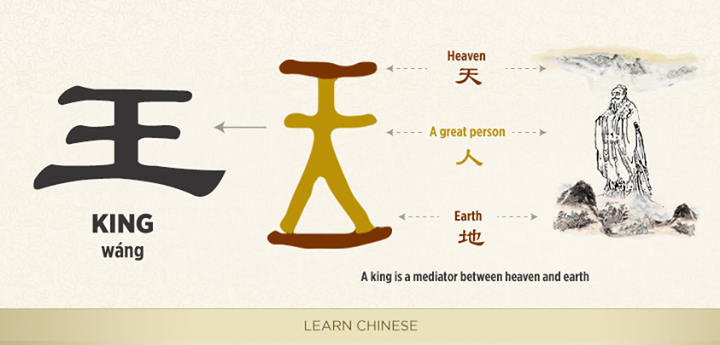
Opening canto - the opening assertion of the Six Ancestors aka dragons flying in the Heavens, the symbolic statement that the Heavens validates their auspicious right to be elevated above men and below the space of universe authority. Reference the meaning of "king" in Chinese character.
meaning of the Chinese character "wang" or "king"
King Taejo, found of the Yi Dynasty, is valorous in war and in the hunt. He is powerful, righteous, blest by the Heavens, and therefore deserves the role of king and ruler/caretaker of the nation.
The last canto, the canto that affirms King Sejong, the fourth king of the dynasty, as the right to continue to rule, as based on the righteous foundation of the Six Ancestors.
Final Comments

Songs of the Dragons was the first book to be printed in the newly developed hangeul writing. Printing was executed with wooden block in October 1447, about two years after its compilation, and 550 copies were presented to various ministers. The editions that are presently extant include those printed in 1612, 1659 and 1735.

The compilation is now recognized as a monument to the cultural independence of Korea from China, a most important source for the study of the Korean language, and the beginning of Korean national consciousness and of vernacular literature.

For more information regarding the translation, reference a 1977 JSTOR preview of the book, by Peter H. Lee. 

Tuesday, April 16, 2019

Hanok: Traditional Residence Architecture in Seoul

Among the fine traditional Korean houses which have been transported from elsewhere to form the Namsangol Hanok Village, at the foot of Namsan, stands a house built by master craftsman Lee Seung-eop. The house originally stood in Samgak-dong, next to Gwangyo Bridge over Cheonggyecheon stream, but in the course of development and redevelopment, the house recognized as a fine specimen of middle-class architecture, was dismantled and reconstructed in a collection of other hanok to create the Namsangol Hanok Village. The house was originally known as 'Hongmun (Red Gate) Seot-gol (Standing Town), Ibyeokdong-daek (residence of Ibyeokdong)'.

This remarkably fine house with unusual embellishments was built for his own use by Lee Seung-up, the master builder who worked on rebuilding Gyeongbok Palace in the latter half of the 19th century. Gyeongbok Palace, which had fallen into disrepair over many decades, was ordered to be restored by Heungseon Daewongun (1820-1899), the father who ruled in stead of young King Kojong (1852-1919).

Approximately a decade after master carpenter Lee Seung-eop constructed this house, he encountered financial hardships and was forced to sell, whereupon in 1889 the yangban grandfather (Kyoungju Lee clan) of Lee Sang-oak, our tour guide but of no direct relationship to builder Lee, purchased the house. Three generations of Lee (Yi) lived in the house: Yi Chaeyun (1837-1917), Yi Chong'ik (1889-1966), and Yi Yong'u (1917 - ??? [the book was published in 1998]). 

Lee Sang-oak, our guide, was born in this house, as were his two sisters and elder brother. He lived there until 1964 (he was about 20) when the house was sold to P'unghan Company and remodeled. From 1970 - 1996 Cho Heung Bank used the residence as a small bank museum. During that time, in 1977, Seoul city government designated the residence as City Cultural Asset No. 20. And finally in 1996, the house was sold to the City of Seoul along with four other residences around the city and all five were relocated to the north side of Namsan with the intent of making a park for the preservation of traditional architecture.

Guide Lee Sang-Oak told us stories of his growing up, the foods and cultural events enjoyed by the family, the symbolism and in particular the pungsujiri (geomantic principles) employed in the architecture, and other insights about the construction of the home, its impact on King Kojong (story later!), and details about personal life. Whoever really considers the stories the walls can tell if someone is willing to patiently listen!


Dr. Lee Sang-Oak and Brother Anthony, friends that go way back, explaining the topography of Seoul and why the original location of his house was so propitious. Located in front of the "Red Gate" entrance to his former house/courtyard.

Dr Lee Sang-Oak explaining the functions of the various parts of the house ... and how they were originally, and then after "renovation". Basically, as one historian puts it, "the city butchered his house". To give examples, brick walls are now plastered, whitewashed walls, the ondol passageways are minuscule and nonfunctional now, the traditional three-steps leading to the house were reduced to the convenient one. [Three steps up meant as a person approached house of prestige or standing, the visitor had to look up and be struck by the grandeur created by height.
Evidently the Namsangol Falconer's Organization has an operator here. There was always a stream of kids around the guy with his kestrel and his falcon. He didn't mind if people touched the larger bird either ... and the bird didn't seem to mind either!
For W5,000 a person could have the kestrel fly and land on his or her hand.
Petting was encouraged!


"Commercial" over, now back to Dr. Lee Sang-Oak. Dr. Lee showed up the geomantic symbols. The whole house had symbols hidden on walls, corners. roof beams, and more.


Pungsujiri (geomatric symbols here): the inverted swastika for Buddhistic thought, bats, trigrams like those found on the Korean flag (each trigram represents a humor: earth, air, etc), clouds, patterned windows for well wishes, ...
 

Originally this was the men's residence and was just a single room. Now it's divided into guest residence rooms for privacy.


Even the bird looks at the woman in hanbok gliding around the grounds.

A bit of entertainment for the foreigners and kids who visit the hanok village: "Walk Like a Yangban". Walking like a yangban was to walk confidently (thus, the wide appearing tiles for "authentic" practice),

The Red Moon Gate, the single entrance to the house: Originally the gate stood tall and proud like this one. What's interesting is that when there were no high-rises, King Kojong could look out of Gyeongbokgung and see ... the Red Moon Gate, and supposedly, discomfited he asked, "Whose gate is that?" And once he found out ... the Lee family was asked, which means told, to lower the gate so that King Kojong wouldn't see a gate taller than himself in the near distance. Of course they lowered the house ... and had to bend way down in order to enter, which conveyed indirectly humility to the king.

A spring look at Dr. Lee's former residence.
____________________________________________________________________

About our guide and the author of the book on his first home:
Book: A Traditional Residential Architecture in Seoul: A Study of the Yi Byeokdong Residence of Hongmun-dong (1998), Hollym University Press.

Sang-Oak Lee earned his B.A. and M.A. from Seoul National University, an additional M.A. from the University of Illinois, and a Ph.D. in Linguistics with a doctoral fellowship from Harvard University. He is now an emeritus professor at Seoul National University, where he was for many years a professor in the Department of Korean Language and Literature.
___________________________________________________________

The essentials about the house -- from Dr. Lee Sang-Oak's book (pp 10-13).


Thursday, February 22, 2018

James Garth - "I Thank Korea for Her Books"


“I thank Korea for her books” James Scarth Gale, Korean Literature in Hanmun, and Allo-metropolitan Missionary Orientalism

Lecturer: Professor Ross King
Date: Tuesday, October 17, 2017 - 7:30pm to 9:00pm
Venue: Second floor Residents’ Lounge, Somerset Palace, Gwanghwamun
             (near Anguk Station, across street from Japanese Embassy)

A Royal Asiatic Society Korea Branch bi-monthly lecture (www.raskb.com for more lectures)


In this lecture, I give an overview of my forthcoming book by the same title. Based largely on the James Scarth Gale papers held by the Fisher Rare Book Library (University of Toronto), this project examines and contextualizes James Scarth Gale’s forty-year career as a missionary scholar in Korea (1888-1927) and argues that Gale is a foundational but largely forgotten and underappreciated figure in the history of modern Korean Studies, particularly as concerns traditional Korean literary culture and literary history—topics that remain underexplored in English-language scholarship to this day. The Gale Papers force a reevaluation of our image of Gale and his legacy: from that of missionary, lexicographer, historian, and occasional translator of premodern fiction, to dedicated bibliophile, and champion, prolific translator and interpreter of Korean literature and literary culture in Literary Sinitic.

The project approaches Gale’s scholarly legacy by focusing on his Korean bibliomania, and is divided into two parts. Part One analyzes Gale’s collecting of old Korean books, his study and translation of them in collaboration with his Korean ‘pundits’, and the relationship of his literary and scholarly work to broader questions of ‘Orientalism’ in general and missionary Orientalism, in particular. 
One key argument is that for Gale, ‘Korean literature’ existed almost exclusively in the cosmopolitan code of Literary Sinitic (‘Classical Chinese’); modern Korean literature was barely getting off the ground in the 1920s when Gale retired, and he was dismissive of vernacular literary production, both premodern and modern.  
A second key argument is that Gale strove through all of his activities to demonstrate that Korea was a ‘civilized nation’ and a ‘nation of scholars and books’, whose deep historical engagement with Chinese civilization and thought had prepared it for Christianity and its one Great Book.  
A third key argument is that Gale’s literary and bibliophilic project amounted to a major intervention into defining—in a contested and transnational intellectual field in colonial Korea in the 19teens and 1920s—the premodern Korean literary tradition and canon; a full accounting of his book collecting and translation projects sheds new light on the process by which the modern notion of the ‘Korean Classics’ was constructed.  
A final question the book poses concerns the relative oblivion into which Gale’s work fell: why is he largely forgotten today, even in Korea, and why was the bulk of his work never published?
Ross King earned his BA in Linguistics and Political Science from Yale College and his MA and PhD from Harvard in Linguistics. Currently he serves as Professor of Korean and Head of Department in the Department of Asian Studies at the University of British Columbia in Vancouver, Canada. His main research interests are Korean historical linguistics, Korean dialectology (esp. the dialect(s) preserved by the ethnic Korean minority in Russia and the former USSR), the history of Korean linguistics (including the history of Korean linguistic thought in Korea and Korean linguistic and script nationalism), and the history of language, writing and literary culture in the ‘Sinographic Cosmopolis’ (漢字文化圈).

Ross King is also the author of a Korean language series: Elementary Korean: Second Edition, (Audio CD Included), Advanced Korean: Includes Sino-Korean Companion Workbook on CD-ROM, and Continuing Korean: Second Edition (Includes Audio CD) - all three published 2014 and 2015.

This lecture can be viewed on the Royal Asiatic Society Korea Branch YouTube channel - 

Thursday, February 8, 2018

The Royal Tombs of Joseon Dynasty

Jinny Hwang Inhee presented on the Royal Tombs of Joseon. She is an expert and has made an in-depth study of the Joseon Dynasty royal tombs, and in her expressive slide show she explained many of the characteristic features of the tombs. Jinny Hwang Inhee, a graduate from the Civics Education Department, Ewha Womans University, spoke in Korean and Kim Jaebum, a RAS Council member, provided English translation. Jinhee is a writer and an educator. Since 2013 she has been serving as President of the Durumari History Education Institute.

A write-up of her presentation is as follows: 

The Joseon Dynasty, the last period in Korean history before the Japanese annexation, was founded by General Yi Seonggye in 1392 and forcibly annexed to the Japanese Empire in 1910. While the dynasty lasted for 519 years, 27 kings and 45 queens reigned, including the last two with the title of “Emperor” with their empresses in the Daehan / Korean Empire. In all, 42 Joseon royal tombs including two in Gaeseong, presently North Korea, are preserved, virtually all that were built. The 40 of them located in South Korea are registered by UNESCO as a World Cultural Heritage not only for the aesthetic value of their sculpture but also for the entirety of their preservation. 
It is also amazing to note that the royal ancestral rituals jerye have been observed continuously for 623 years. The main Jeonju Yi family Jongyagwon had to overcome difficulties following the demise of the dynasty to continue the ritual at the graves, while that held at the main shrine of Jongmyo, which is now held once on the first Sunday of May each year, is also a UNESCO World Cultural Heritage.
JOSEON DYNASTY
  • last of the Korean traditional dynasties
  • founded by General Yi Seonggye in 1392
  • 27 kings & 45 queens
  • from 1392 - 1910, a span of 519 years
  • royal tombs - a graveyard exclusive for kings and queens
Joseon Royal Tombs
  • 42 tombs in total = 40 in South Korea + 2 in Gaeseong, present-day North Korea
  • the 40 tombs in South Korea are UNESCO World Culture Heritage, and they are protected for their aesthetic value and must be preserved in their entirety
  • all within 44 kilometers of Seoul, the capital
  • 2 in Yeoju, Gyeonggi-do
  • ? in Yeongweol, Gangwon-do 
  • Jongyagwon, for the main Jeonju Yi family
  • rites at royal tombs continued even during Japanese occupation
  • Jongmyo Jerye 
  • 1st Sunday of May each year
  • UNESCO World Cultural Heritage
  • continued for over 600 years
King or Queen Dies
  • establish gukjangdogam
  • place corpse in jaegung and keep it at binjeon
  • observe rites and mourn for 5 months
  • no preservatives or cooling facilities
  • cultivate juniper for incense
Constructing Tombs
  • select site
  • form mound and excavate 3 meters deep
  • make room for stones or lime walls
  • stone sculptures to decorate
  • build jeongjagak at entrance
  • erect hongsalmun gate 
(read more about tombs and their terms)
Burial and Rites
  • 5 months after demise
  • take soul in shinju back to the palace
  • rites in honjeon every morning and evening for 3 years
  • move shinju to Jongmyo
  • royal name, the myoho, is given
  • queen's soul to Jongmyo 3 years after king's death
Location and Feature
  • best location: big mountain to the north, low hills to the south, views to the east and west
  • features differ between each era based on:
  • state law
  • extent of royal power
  • political circumstances
  • economic conditions
  • topography of the site
Basic Structure
  • jaeshil at entrance
  • geumcheongyo bridge
  • baewi

Chamdo: Path for Worship
  • long stone path for hongsalmun
  • left: shindo - soul, tomb owner
  • right: eodo - lower status on up to ancestors
  • soul-tablet in yellow cloth on shindo
Staircases
  • left: luxurious patterns for souls
  • right: without ornaments for kings
  • down staircase behind the palace
  • soul to neungchim to fall quietly to sleep, no stairway to come down
Jeongjagak
  • exclusive for royal tombs (if at other tombs, people arrested and killed as traitors)
  • entrance and exit:
  • direction decided and must connect to chamdo
  • enter from the east: sunrise, beginning, birth, spring, etc.
  • leave toward the west: death, extinction
Smaller Annexes
  • subokbang - on right before jeongjagak; for tomb keeper and night duty
  • suragan - royal kitchen on left; prepare food and offerings
  • bigak - a little further inside and on the right; tombstone etching on whose tomb
Sachoji or Gang
  • hill behind jeongjagak
  • unique style of Joseon royal tombs
  • 2 meanings of gang:
  • tank for storing vigor streaming into the soil
  • demonstrate dignity as power
  • hiking precluded - somewhat open to the neungchim at the front
Museogin and Munseogin
  • stages divided by stones on top of sachoji
  • lower stage: museogin and maseok - have warrior-shaped generals with swords
  • middle stage: munseogin and maseok - have officials, most of whom are scholars
  • interpretation: "The pen is mightier than the sword" meaning literary preference over military 
  • reign continues posthumously
  • variations in garments by king:
  • museogin placed only in royal tombs
  • civilian graves considered treacherous
Neungchim
  • top stage - burial mound neungchim
  • gokjang:
  • walls and roof tiles surrounding 3 sides
  • sun, moon, stars
  • resemble palace buildings' back walls
  • royal tombs as epitomes of the palace
Seogmul and Honyuseok
  • seogmul - in front of gokjang
  • yangseok - sheep = obedience; repel evil
  • hoseok - tiger = loyal; patron neungchim
  • honyuseok - in front of neungchim
  • for offerings in ordinary graveyards
  • "stone where the soul plays"
Goseok and Mangjuseok
  • goseok - stones supporting honyuseok look like drums
  • guimyeon - faces of ghost or goblin
  • mangjuseok - on each side of honyuseok: "observing stone poles" with several hypothesis about their use:
  • sign for soul from body to find neungchim
  • device to harmonize yin and yang
  • instrument to hold vigor from being scattered 
  • columns a division between this world and the next
Seho and Jangmyeongdeung
  • seho embossed on stone poles
  • shape of ear with holes
  • developed into animal shapes
  • some not like tigers but wizards
  • jangmyongdeung to honyuseok
  • to pray for souls of the departed
  • shape altered in each era
Conclusion
  • scale gradually shrank - later kings were more pragmatic
  • initial period of the kingdom:
  • conscripted manpower 5,000 for each tomb
  • construction work - up to 5 months
  • mobilized personnel to carry food
  • construction bothered people
  • great agony on people in Gyeonggi where a large number of royal tombs have been built
  • their endeavor and perseverance enables us to possess World Cultural Heritage today
Books Published:


Other notes:
  • gukjangdogam - nation-wide royal funeral 
  • In inclement weather when the body began to smell, the court spread juniper branches.
  • 일월성신 - sun, moon, star decorations on the wall that surrounds the tombs
  • 선장릉 - When UNESCO came to evaluate the tombs as a future UNESCO World Culture Heritage site, the Korean government didn't want to show the 선장릉 because there was no body inside. Eventually they did and it was highly regarded, especially as it was on very valuable land.
  • The Silla and Koryeo Dynasty tombs were traditionally built on flat ground, but in the Joseon Dynasty, tombs were built on the top of artificial mounds.
  • Today, there are three places where royal ancestor worship are held - the dates:
  • 1st Sunday of May (solar calendar)
  • each ancestor's memorial day

Thursday, August 17, 2017

Falun Gong

In the summer of 1999, after thousands of practitioners had staged a silent protest in Beijing against unfair treatment, the Chinese Party leadership saw the group as a threat to communist rule, declared it as an evil cult, and launched a massive campaign to eliminate Falun Gong in China. Since then thousands of practitioners have been locked up and tortured to death, and people are scared to associate with Falun Gong due to government campaigns and threat tactics.

Falun Gong combines Buddhist with Taoist meditation and exercises; the religio-philosophy follows the principles of truth, benevolence and tolerance as preached by the founder Li Hongzhi, who practitioners refer to as Teacher Li. At the turn of the century there were hundreds and thousands of followers within China. Typically twice a day Falun Gong groups gather to meditate and practice Falun Gong exercises, which are much like the movements of tai chi. After meditations and exercises, they read Teacher Li's book, which is a guide on how to cultivate one's mind and be a good person.

After late July 1999, Falun Gong was declared a cult and an illegal organization and practitioners were summarily ordered not to practice it anymore. At first those caught had to read government propaganda materials and denounce Falun Gong publicly. Then some provincial governments assigned a quota to each local public security bureau or government agency, ordering them to reform Falun Gong members, and if a certain official exceeded the quota, he or she would be awarded a cash prize. More and more practitioners were refusing to denounce their beliefs, and so before the year was out, local police began searching homes for Falun Gong materials and treating each practitioner like a criminal. If a person was caught with "incriminating evidence", then his or her whole family was blamed and punished.
The above information is taken from Liao Yiwu's "The Falun Gong Practitioner", The Corpse Walker: Real-Life Stories, China from the Bottom Up (2008) p. 230-241, a book that had to be smuggled outside of China in order for it to be published.
Eyewitness Recounts Forced Organ Removals From the Falun Gong in China,
from the blog 
The International Coalition Against Human Trafficking

PAMPHLET ON FALUN GONG

In Korea there are a few Falun Gong practitioners, some undoubtedly refugees from China. Near the gates of Jongmyo Falun Gong practitioners gather to meditate and frequently in Insadong pamphlets are handed out to passersby. I accepted a pamphlet in English after pausing on the sidewalk to look at the signboards of torture that has been inflicted on Falun Gong in China.

The front of the pamphlet reads, "Help end the 11-year-long persecution of Falun Gong".

Q: Why should I care?

A: Chinese communists export state terror. Chinese regime uses political and economic pressure to silence the media and politicians. Chinese regime uses the state-run media to cover up their human atrocities, and spread its propaganda and hate campaign worldwide. We must take action. Each voice counts!

Q: How can I help?

A: Please inform the media and your elected officials. Please help spread the facts of the persecution. www.faluninfo.net

Q: What is the Falun Gong?

A: Falun Gong, also known as Falun Dafa, is a mind-body practice based on Truthfulness-Compassion-Tolerance. It was first introduced to the public in 1992 by Mr. Li Hongzhi. By 1999, there were 100,000,000 people practicing Falun Gong inside China alone. Today, it's practiced in over 110 countries around the world.

Falun Gong Exercises and Meditation

  • Good for all ages
  • Relieve stress and anxiety
  • Gain energy and inner strength
  • Improve physical and mental health
  • Attain greater wisdom and spiritual growth

The Teachings of Falun Gong

  • Falun Gong, an introductory book with illustrations of the exercises and explanations of the priniciples.
  • Zhuan Falun, the systematic and comprehensive guide for the Falun Gong practice.
  • Free downloads at www.falundafa.org

Q: Why the persecution?

A: "Communist Party sources said that the standing committee of the Politburo did not unanimously endorse the crackdown and that President Jiang Zemin alone decided that Falun Gong must be eliminated." John Pomfret, Washington Post, Nov 12, 1999.

The former Chinese Communist dictator Jiang Zemin launched this persecution in July 1999. Why?

  • Jiang was jealous of Falun Gong's popularity -- by 1999, 70-100,000,000 people were practicing in China. This outnumbered the Communist Party membership.
  • Jiang was insecure about his power, and feared losing control over people's minds.
  • The Communist dictatorship could not tolerate any other beliefs. Falun Gong helps people gain higher morality and spiritual growth. Jiang viewed this as the biggest threat to his corrupt regime.

In order to coerce practitioners to give up their belief in Truthfulness-Compassion-Tolerance, Jiang founded the 610 Office (a gestapo-like organization), and deployed the most extreme tortures in human history: live organ harvesting, brainwashing, physical and mental torture, psychiatric abuse, etc.

At least 3,304 practitioners are confirmed to have died from torture in police custody as of October 1, 2009. The actual death toll well exceeds this.

Live Organ Harvesting Exposed


Vital organs including hearts, kidneys, livers and corneas are systematically harvested from live Falun Gong practitioners and sold and transplanted at enormous profit. Their bodies are cremated on site to destroy the evidence.


"... further investigation has only reinforced our original conclusions that the allegations are true." David Kilgour, former Canadian Secretary of State (Asia-Pacific region) and David Matas, human rights lawyer and author of Bloody Harvest: Revised Report into Allegations of Organ Harvesting of Falun Gong Practitioners in China. www.organharvestinvestigation.net

"I think it is time to put the Chinese Communist regime on trial for genocide. I firmly believe that what we are doing today [unclear what that is] should be carried out in every city of the world and every day until justice is served." Edward McMillian-Scott, Vice-President of the European Parliament, press conference in London.

"Organ harvesting has been inflicted on a large number of unwilling Falun Gong practitioners at a wide variety of locations for the purpose of making available organs for transplant operations." Manfred Nowak, the United Nationals Special Rapporteur on Torture.

"... at least 87,000 Falun Gong practitioners have had their organs harvested by the Chinese Communist regime in these years." Ethan Gutmann, China expert and the author of the book Losing the New China.

_______________________________________________________________________

And a one-hour documentary on illegal organ harvesting of Falun Gong in China:
Harvested alive -10 years investigation of Force Organ Harvesting.

Sunday, June 11, 2017

Spirit of the Mountain, Inwangsan

David Mason, author of Spirit of the Mountain, gave a walking tour of Inwangsan (also euphemistically known as Witch Mountain) and Sajik-dan, the altar for prayers related to earth and grain.  Some of the highlights of the tour are:

Near Sajik-dan is the shrine to Dangun, founding father to the Korean nation as it is today. Dangun was the grandson of heaven and the son of a bear (see Korean creation myth).  He is said to be the one who brought the Bronze Age culture to Stone Age Korea. And being the grandson of a god, he is said to be immortal ... that is, he became the Sanshin, the Mountain Spirit (god), and his spiritual presence is still worshipped in Korea today. The shrine to Dangun is the largest shrine in the Korean peninsula, and in the shrine, unlike pictures of old venerated men with the gray-of-wisdom hair, Dangun is seated amidst red pine (the supreme tree of Korea) with white cranes (the messenger bird that carries messages to and from heaven) and having black-as-midnight hair. The hair symbolizes his immortality, just as the pine and cranes symbols his connection to heaven.


The Benevolent King emanating from the rocks on Mt. Inwang


The Benevolent King sitting cross-legged with the tiger rock to the right and a black bird, perhaps a magpie, slightly above the tiger. Of course the Benevolent King sits among red pine trees; he is robed in heavenly trees.
View from Seon-bawi, slightly below the Benevolent King.
Source: Dan-gun Shrine at the southern foot of Inwang-san, just above Sajik Altars Park
"Above, the craggy-peak on the left is the In-wang or Benevolent* King himself (in a seated position seen in left profile), or the San-shin if you will, overlooking downtown Seoul. To his right (the other rocky peak) is his accompanying Tiger (pet / servant / guardian / mount / enforcer / alter-ego) with a dark bird perched behind his head. These natural boulder-cliff-formations are among Korea's most significant sacred monuments, serving as masters over the nation's most active center of Shamanism and folk-religious traditions. They are both "manifesting" up out of this mountain in geological time. (Read more on this Korean concept of spirits manifesting upwards in stone is.)  Between and behind them is, most unfortunately, a military base, because this most sacred peak overlooks the Gyeongbok-gung Palace (main royal seat 1392-1910) and Korea's Presidential Mansion (Cheonwadae, the "Blue House").  
These unique rocky outcroppings on the southern cliff face of this mountain, along with other striking natural features such as the Seon-bawi (directly below the King) have attracted shamanic worship to this place since before recorded history. The main figure can be seen as a Benevolent King that will rule humankind (or at least Koreans) in a utopian state when he finally finishes manifesting, or as a kind of natural Buddha statue, or as Mireuk-bul (the Buddha who will come in the future for universal enlightenment and salvation), or the best interpretation (in my opinion), as the very powerful San-shin [Mountain-spirit] of these crags manifesting into the world in stone in his role as King of the Mountain (as he is usually painted, wearing distinctly royal clothing), extended to national significance (could even be seen as the return of Founding-King Dan-gun, who is sort of the San-shin of all Korea). The fact that he (or she?) is side-by-side with a crouching tiger certainly lends weight to the San-shin interpretation -- as that deity is always depicted in icons accompanied by a tiger (Korea's national animal). 
Seon-bawi - Originally meaning "immortal rocks" but now translation provided as "meditation rocks". David Mason thinks by translating the rocks as meditation instead of immortal, the rocks can better be explained by Buddhism, which how the area is now being referred to ... not as a place for shamanic traditions but as a Buddhism temple grounds.
*The Chinese character pronounced In is one of the most important in Oriental philosophy; it is often translated benevolence, or maybe human-hearted, or simply Good / goodness; it's a key Confucian and Neo-Confucian term, as the master himself repeatedly used it to describe how rulers ought to act towards those under them (if they do not they are not to be considered legitimate rulers).It is also heavily used by Buddhists due Inwang-gyeong [Benevolent King Sutra] which was very influential in the early centuries CE when Mahayana Buddhism became established in China and spread to the Korean Peninsula."  
[On the highly-sacred "Benevolent King" Mountain, Shamanic center of Korea's Capitalan important part of the Bukhan-san Sub-Range]

Friday, November 11, 2016

Recipes Based on the "Eumsikdimibang"

The Hangeul Museum occasionally hosts a special program on traditional food preparation based on the Eumsikdimibang in salute to it being the first recipe book printed using the Hangeul characters. King Sejong the Great, fourth king of the Joseon Dynasty, invented the alphabet in 1446 and yet for many years, Chinese characters still predominated as the official text for legal documentation and yangban scholarship. Even afterwards other recipe books were written using Chinese—most were rudimentary in their organization and range of recipes—but Lady Jang Gye-hyang (1598-1680) of the Andong Jang family and who married into the Jaeryeong Lee family wrote in great detail recipes that she had gathered and created herself in a book that has since been passed down to 13 generations of the Jaeryeong Lee family.

A copy of the original Eumsikdimibang in the background and a modern Eumsikdimibang with recipes in the foreground. Both are available for reading at the library on the first floor of the Hangeul Museum, Ichon Station, exit 2.

The original title is deceptively in Chinese, but the writing and title itself inside is in Hangeul.
This book is remarkable on two key levels—it is the first recipe book written in Hangeul (written about the year 1664, more than 200 years after the creation of Hangeul), and it is the first recipe book as well as the oldest book written by a woman. 

Lady Jang was not a trained scholar, and yet, so remarkable is the organization, language and attention to detail that it is now used as a very important source for studying Joseon culture of the time, primarily food and household culture. As a tool to study language of the time, the pronunciation of the “di” in “dimi” was then pronounced “ji” has been noted, colloquialisms are studied, and onomatopoetic words have shifted in meaning or even disappeared. As for household culture, common foods of the times have similarly changed or disappeared. 

Some examples—the common wax gourd of the Joseon is now difficult to find; ginger was more commonly used than garlic; peppers—though first mentioned in a Chinese character book in 1613 previous to the Eumsikdimibang—are not mentioned at all and this is thought to be because of her remote village but also a reflection on the thought of the time that peppers were more for medicinal purposes rather than the food staple they presently are. Spicy foods were likely achieved with mustard and black pepper, which is not in the pepper family at all, or were simply without the pepper like in present-day white kimchi and water kimchi. Meats were different too—pheasant was commonly written about but not beef, most likely because cows were needed for farming and there was no extra land to raise them for food. 

Other recipe books written in Hangeul in the Joseon Dynasty after the very remarkable Eumsikdimibang.
Literally the book Eumsikdimibang means “food” + “dimi” or “very best tasting” + “bang” (method). The book gives 146 recipes which range from snacks, drinks, light meals for hungry people, food for royalty and specialty foods for birthdays and other important events. To pass this down to her descendants, Lady Jang organized the book into three sections:

Noodles and rice cakes — 18 dishes, which also include dumplings and traditional pressed sweets 
Fish and meats — 77 recipes, basically the bulk of the book, with recipes on seafood (sea squirt and sea cucumber, etc) and fish, stews, pheasant, chicken and dog. Also included—rice cakes (made from mung bean) and cookies, noodles and vegetable dishes 
Winery — 51 recipes, which also includes makgeolli, wines with and without yeast, and vinegar
But along with the recipes, she included food preparation and storage methods and other tips on how to run a household. What is NOT included in this book but which we expect in modern recipe books is actual measurements of ingredients rather than just a listing, verbs like cook and roast were used but specific verbs detailing process were rare or non-existent (e.g. mince, dice, blanch, grate, sift, kneed). 

However, researchers on the preservation committee for the Eumsikdimibang have “restored” 53 of the original 146 dishes and these dishes are now used for spreading the taste of Korean cuisine from 300+ years ago. The food preparation class that the Hangeul Museum hosted today is just one of many such classes for spreading the word and sharing the culture of the Joseon Dynasty as written in the Eumsikdimibang. 

Typically, families pay ancestral respects to their ancestors up to the third or fourth generation, but the Jaeryeong Lee family still pays respects to Lady Jang for her virtuous dedication to her father, husband and son and to the society she helped feed in Manchu invasion times as well as her passing down her household wisdom to them through the centuries. They also pay respects to her husband for being a principled nobleman scholar.

For more info, watch the YouTube clip on the Eumsikdimibang and Lady Jang (28:01 min).

Making Three Foods from the Eumsikdimibang


Excellent education is teaching the students to go to the source, so each table was given a book to look at the part where our three specific foods that we would be making were located. 
Food #1: 잡과편, a boiled flour dessert which is rolled in sweetener and then in flakes (modern times we use less jujube and nut slices and often substitute with colored coconut)


To expedite the process, we were given bags of premixed flour and told to roll it out into uniform balls, and then while we moved on to our next recipe to shape, a cook outside the building had a set-up and would boil the balls for us so we could later finish the process in our "kitchen".

shaping the balls
Thank you, dear cook, for doing all our hard work. Honestly, I still don't know how to make these things.
After they were boiled, we rolled them in a rice syrup to make them sticky and rolled them in the prepared jujube and nut slices. One of our team members and myself preferred not to have the sweetener so we simply rolled our in colored coconut shred. 
Recipe #2: 작면, a summer tea using mung bean jelly and 오미차, five-flavor tea. Since this is very complicated and time-consuming our master chef and her assistant made it for us. She used her own 3-year-long fermentation process 오미차 to give it the proper flavor. Her "elixir" can't be bought in a market so it was special indeed! She showed us how to make the mung bean jelly to go in the tea, but since the weather is cold, she used a pear, which she had delicately cut up in shaped pieces, and warm water to serve as a warming tea. Delicious! 


Spooning in the ornamental pear pieces that float on the tea. Very attractive and the smoothness of the pear harmonizing the the sharp, bitter sweetness of the fermented 오미차.

Recipe #3: 다식, pressed desserts made in the special tool (다식틀) which has designs for pressing "luck" or special sentiments in it to be passed on to those who consume the treats. Traditionally five colors of pressed 과자, which translates strangely as just "desserts", were used, all of which were made from natural plants. 


black - ground black sesame seeds
brown - cinnamon
red - prickly pear fruit
yellow - originally from the pollen of pine trees, but now from soybean flour
green - green tea powder


The meanings of some of the symbols in our team's 다식틀.


A very nice program but very time-consuming for the organizers. We participants basically only did the decorative part of the creating process, but it was a very pleasant "taste" of the culture. Before we made anything, there was a large display table featuring some of the pressed dessert possibilities as offered in the Eumsikdimibang. While the recipes are based on originals, some of the ingredients have been altered due to availability (wheat flour, coconut, modern store-bought sweeteners), difficulty in producing the original ingredients (acorns) or because of expense (pine tree pollen). No matter. All are beautiful, and unfortunately, all are time-consuming.

On the far end - boiled and rolled in sweeteners and decorative materials.
On the near end - pressed sweets imbued with messages of fortune or good wishes.