Showing posts with label politics. Show all posts

Tuesday, January 7, 2020

Korean War and Geoje POW Camp

In the briefest summary of the institution of the POW camp on Geojae-do...

North Korea forces, crossing the divisional 38th parallel at multiple points, invaded South Korea in a surprise attack on June 25, 1950. Three days later Seoul was taken, and the North Korean forces pushed southward. Battles rages between the brother countries and in the early part of the war, North Korean forces had the South Korean army on the run. However, with the United Nations and U.S. forces joining the South Korean side and the General McArthur-led Incheon invasion, the South then began to push back. Communist China then joined the North with 1 million troops halting the push but not halting the war. With the progression of the war, hundreds and hundreds of North Korean soldiers were taken, and the question of what to do with the prisoners became a problem. Not nice to be told but as a reality of war, many were shot and buried hastily in mass graves but with the progression of war accommodations had to made for those who had been captured. 

In 1951, because so many POWs were being taken and because there was a need for them to be held in a secure place well away from being taken by the attacking North, a POW camp was built in the Gohyeon and Suwol area of Geojae Island. The POW camp eventually accommodated 173,000 prisoners with 20,000 communist Chinese and 300 women.


North Korean Invasion of the South

At 4 a.m. on Sunday morning of June 25, 1950, the North Korean army launched a massive surprise attack across the 38th parallel and "committed an iniquitous invasion of South Korea" (signboard in the camp).
"On the day the war broke out, the UN Security Council was convened promptly. It passed a resolution to create the United Nations Command on July 7, 1950 and General Douglas MacArthur was appointed Supreme Commander two days later. Combat troops from 16 friendly countries joined the UN Forces and 4 countries sent support troops for medical assistance and related areas. Thus, the UN Forces along with the Republic of Korea Forces fought against the enemy to protect the freedom and peace of this land."
 

Dioramas of the Korean War
Division between the North and its allies (left) and the South and its allies (right)
North Koreans invading the South
South Koreans setting up defense zones and fighting back
As the ROK army is forced to retreat because of superior forces from the Chinese army which joined the North, refugees desperate for safety endeavored to cross the Daedong River.
History of the Korean War

 
POWs of the Korean War

As the number of prisoners increased exponentially, the UN Command began planning to build an additional prison camp outside of Busan No. 1 prison camp. Geoje Island and Jeju Island were both considered as candidates, and soon a camp was built on Geoje Island and called "Operation Albany" (30 Dec 1950).
North Korean soldiers, Chinese officers and soldiers, and females prisoners were contained there. 
  • 22,604 communist POWs were held in the camp (total)
  • 14,704 Chinese
  • 7,900 North Koreans
The POWs were a major factor in the Korean War not reaching armistice long before the 1953 date. Truce talks were first held on July 10, 1951, but were deadlocked because of the POW problems—how to treat them, how to repatriate them and whether repatriation should be forced or allow the POWs to choose the country (North or South) where they would remain. The option of choice was the biggest controversy—the North demanded the return of all POWS, the South preferred giving the POWs freedom of choice.

If I the blogger am reading the signboard correctly, 359 Korean and UN soldiers who had been taken prisoner during the war refused repatriation. Delegates from the North and the South were to persuade them according to the terms of the armistice agreement, and the persuasion period was to last 120 days at the DMZ under the protective custody of the Neutral Nations Repatriation Committee. However, only 30 days later due to the delay on the communist side, the term of persuasion ran out on December 23, 1953. The train below symbolizes the last train heading back to the North with soldiers having to make their FINAL desperate decision at the station about staying or leaving ... with no chance of ever reversing that decision!


The POW camp was officially closed after the release of the anti-communist prisoners by the South Korean government in 1953 and the armistice agreement on June 27th, 1953. In December 1983 the camp grounds was designated as South Gyeongsang Province Cultural Treasure No. 99, and since has been remodeled into the Geojae POW Camp Park where visitors can learn of the lives of prisoners, see dioramas of the Korean War and artifacts of the prisoners themselves—their clothing, weapons, how they entertained themselves, and even how their choice of weapons within the camp as there were frequent battles between the “anti-communists” and the “communist” prisoners, carry-overs from the Cold War era.

The last remaining structure of the Geoje POW camp that remains today.

Wednesday, December 25, 2019

Songs of the Dragons

Songs of the Dragons Flying to Heaven, translated by James Hoyt (1979), was a compilation of 125 cantos compiled to establish the legitimacy of King Sejong's lineage. King Sejong (1397-1450), 4th king of the Joseon Dynasty (1392-1910) ordered the compilation to extol the merits of the Yi (Lee) lineage in the new dynasty, and printed the compilation with the newly-made hangeul script made for all people of the nation to easily read. Songs of the Dragons was the first book to be printed in Sejong's new "alphabet".  


Three Reasons for the Compilation

(1) Extolling the great accomplishments of the six generation of founders of the new Yi, or Chosun/Joseon Dynasty. The heroic actions of the Six Ancestors are compared to the flights of dragons symbolic of the throne, hence the title of the work. Of the Six Ancestors, only two actually sat on the throne of Korea. The other four generations of the House, preceding the establishment of the dynasty, are designated as chamnyong, or "submerged dragons," and their residences as chamjo, or "submerged palaces," after Chinese usage. [When Yi Seong-gye took the throne, he had to justify through ancestry that he was eligible for the throne. Ancestry was of need traceable back by at least four generations; thus, when Yi Seong-gye established his Dynasty, he brought with him the bones of his four primary ancestors.]
  • The ancestors of the Yi family lived in Jeonju, Jeolla-do, and their prominence dates from Mokcho (Yi An-sa, d. 1274), the First Ancestor, who served the Goryeo Dynasty (918-1392) in various capacities in a number of provinces. Mokcho's descendant in the fourth generation, Yi Seong-gye, became King Taejo, the founder of the Yi Dynasty after overthrowing the Goryeo Dynasty.
  • The Second Ancestor, Ikcho (Yi Haeng-ni), was noted for his difficulties with the Jurchen tribesmen in the North.
  • The Third Ancestor, Tojo (Yi Ch'un, e. 1342), a skillful bowman.
  • The Fourth Ancestor, Hwanjo (Yi Cha-ch'un, 1315-1361), based the growing power of his family on the imminent collapse of the Mongol empire in China (1368) and the concomitant weakening of the Mongolized dynasty of Korea.
  • The Fifth Ancestor, Taejo (Yi Seong-gye, 1335-1408), wielding military power as a result of his expeditions against both the Jurchen tribesmen and Japanese freebooters and for espousing a program of land reform and alliance with the Ming, he established himself as king and ruled until his abdication in 1398.
  • Chongjo, an ineffectual son of Taejo and who was a caretaker-king during a period of rivalry over succession (1399-1400), does not merit qualification to be listed as one of the Ancestors of the dynasty.
  • The Sixth Ancestor, Taejong (1401-1418), completed the work of establishing a firm dynasty, which would last until 1910.
First four kings of the Yi/Lee Dynasty / Joseon Dynasty:
  1.   Fifth Ancestor: Taejo (r. 1392-1398)
  2.   Jeongjong (1398-1400)
  3.   Sixth Ancestor: Taejong (1400-1418)
  4.   The Great King Sejong (1418-1450)

(2) Providing inspiration for King Sejong and subsequent kings on the Yi line by recalling the vicissitudes and tenacity of the Six Ancestors. No less than 15 of the 125 cantos end with the hortatory refrain, "Let Your Majesty not forget this!"

(3) Proclaiming to the world that the accession of the Yi family to power was in accordance with the Chinese concept of the Mandate of Heaven. This concept of the Mandate of Heaven is an ancient one, formulated by Tun Chung-shu (2nd century BC), who declared that when a ruler commits unjust acts, Heaven shows its displeasure by such calamities as earthquakes, famines, and floods. If these warnings are not heeded, Heaven seeks to admonish rulers by means of such portents as eclipses and comets. If these are not needed, the ruler loses the Mandate, and Heaven selects another to mount the throne. The attainment of the Mandate of Heaven's divine plan is the much repeated theme of Songs of the Dragons Flying to Heaven, and the word "Heaven" in the title refers to Heavenly favors bestowed upon the six heroes. The writing of the work is, in short, a written legitimization of the Yi rule.

CONTENTS

All of the cantos are focused on the assertion that the Six Ancestors have the favor of Heaven. The earlier cantos speak of the exploits of the first four Ancestors, aiming to support the Fifth Ancestor Taejo, who took the throne. The cantos XXVII to XCV (68 or 54% of the cantos!) were of the exploits of King Taejo, how mighty he was and how he repeatedly saved the country through his valorous deeds in battle or in the hunt. No cantos were given to Jeongjong (1398-1400), the ineffectual son of Taejo who ruled briefly during a period of political instability and fighting for the throne. Cantos XCVII to CIX (13 cantos) were dedicated to the Sixth Ancestor, Taejong (1400-1418). Those 13 cantos primarily reflected the time of instability and mostly sang of assassination plots and recognition of loyalty. Cantos CX to the end of the songs, Canto CXXV, sang of the merits and righteousness of the Great King Sejong, the Sixth Ancestor. These cantos were a series of admonishments. Admonishments:
  • to not forget the hardships of his Ancestors and to be steadfast in purpose
  • to not forget the contrast between the magnificence of his palace and the crudeness of his Ancestor's shelter
  • to not forget the contrast of his embroidered belt of office with the crude armor of his Ancestors
  • to not forget his Ancestor's hunger as he dines of the finest of food and richest of drinks
  • to not forget his Ancestor's fierce battles as he presides over a brilliant and peaceful court
  • to rule with clemency, an important quality of kingship
  • to have compassion
  • to be humble lest he become a tool of conniving ministers
  • to act in a manner befitting a king
  • to overcome with benevolence the plot of evil ones
  • to maintain a strong economic basis for the state
  • to be forgiving to his advisors as was Taejong
  • to respect scholarship and beware of trouble-makers
  • to evade slander mongers and those who embroider the truth
  • to despise Buddhism and revere Confucianism
  • to emulate the Flying Dragons
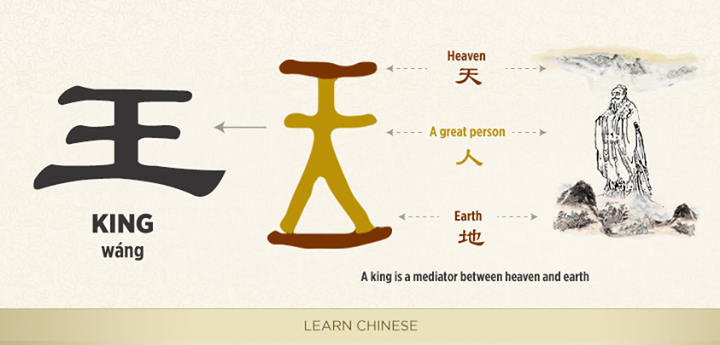
Opening canto - the opening assertion of the Six Ancestors aka dragons flying in the Heavens, the symbolic statement that the Heavens validates their auspicious right to be elevated above men and below the space of universe authority. Reference the meaning of "king" in Chinese character.
meaning of the Chinese character "wang" or "king"
King Taejo, found of the Yi Dynasty, is valorous in war and in the hunt. He is powerful, righteous, blest by the Heavens, and therefore deserves the role of king and ruler/caretaker of the nation.
The last canto, the canto that affirms King Sejong, the fourth king of the dynasty, as the right to continue to rule, as based on the righteous foundation of the Six Ancestors.
Final Comments

Songs of the Dragons was the first book to be printed in the newly developed hangeul writing. Printing was executed with wooden block in October 1447, about two years after its compilation, and 550 copies were presented to various ministers. The editions that are presently extant include those printed in 1612, 1659 and 1735.

The compilation is now recognized as a monument to the cultural independence of Korea from China, a most important source for the study of the Korean language, and the beginning of Korean national consciousness and of vernacular literature.

For more information regarding the translation, reference a 1977 JSTOR preview of the book, by Peter H. Lee. 

Thursday, August 29, 2019

Bangudae Petroglyphs, Ulsan

Two of my students put together this phenomenal presentation on the Bangudae Petroglyphs of Ulsan, and with their permission I am able to share their research. Thank you, Tae Ho and Sun-Hyung! I am so impressed with your 'sacred site' research!


For more on the mysteries of Bangudae, reference Duncan Caldwell's "Save the Prehistoric Whales". Duncan Caldwell is a archeologist, ethnologist, painter, poet, writer, lecturer, in short, a Renaissance Man!

Or visit the National Museum of Korea:
Bangudae Petroglyphs in Ulsan 
(National Treasure No. 285)

The carvings and line drawing on the rocky wall of Bangudae enable us to get a glimpse of the life of prehistoric people by means of vivid portrayals of their hunting, fishing, and festive activities. Among the whales, turtles, tigers, deer, and other animals represented here, some appear as being captured in nets or cages. One can also see people in boats and warriors dancing with their genitals exposed. It is assumed that the petroglyphs functioned as a sort of prayer for bounteous harvest and success in hunting and fishing.

Saturday, May 11, 2019

Korean Stone Art Museum: Symbolism and Stone

The Korea Times - March 25, 2016

Asiana, Monthly In-flight Magazine - November 2016

Korean Heritage (web site)

At the Korean Stone Art Museum, all of the stones represent not only cultural art of the past but the symbolism of life beliefs as well!

Muninseok – stone figures representing Joseon literary officials. They are attired in official robes and winged hats or golden headgear (depending on statuary) and carrying a hol (an object held by courtiers when granted an audience with the king). These official garments were worn by courtiers when they participated in national occasions like the king’s wedding and in the national rite for worshipping the late kings and queens of the Joseon Dynasty. During the Joseon era, a pair of stone officials was placed in front of a royal burial mound to serve as guardians of the king’s tomb, along with janggunseok and other animal-shaped stone sculptures similarly symbolizing protection of the graves against evil spirits.

Janggunseok – stone statue of military officers equipped with armor, a helmet and swords. Janggunseok and muninseok were placed in the foremost position in front of the grave mound of the king and together with animal-shaped stone sculptures they guarded the king against evil spirits. The demonic faces often engraved on the hilt of their swords and on the guardian’s shoulders represents warding off evil spirits and providing protection.

Dongja – “child attendants” were placed at a tomb of a person of exalted social class and were believed to serve as messengers of the gods. Therefore, these messengers each held or carried wish symbols—e.g. lotus flowers for prosperity and longevity, a bat symbolizing happiness and fertility, a fan for warding off evil spirits and bringing good fortune. Prayers to the dongja were believed to be realized.

Inside is a Hill of Prayers with a collection of dongja, each having a representative symbolic message
Outside is another dongja collection, with each dongja playing or participating in some mode of daily life—e.g. holding traditional instruments, holding kitchen utensils or playing traditional games. These instrument carvings are also seen on beoksu.

Dongjaseok (not to be confused with dongja, the child attendant) is the stone figure of the dongja. Found in and around Seoul, these sculptures were placed before the graves of high-ranking government officials or members of the royal family, except of high-ranking kings and queens, during the 16th – 18th centuries. Wearing plain clothes at times and other times cloaked in heavenly robes and double-knot hairdos, they were believed to connect the world of the deceased with that of the mourners. They stand obediently and submissively in front of the graves.

Dongja were deemed to serve various gods in Taoism, the Buddha in Buddhism, and the occupants of the graves in Confucianism. Therefore, the shape and role of dongja vary from grave guardian to village guardian, depending on the religious thought. The early child attendant images were highly decorative and vibrant as shown by Buddhist works, but they were gradually superseded by simpler and more austere images under the influence of Confucianism. The statues were often combined with muninseok, or stone statutes of civil officials, after the 17th century, resulting in the disappearance of their original characteristic features.

Beoksu – the stone version of the wooden jangseung (yin and yang guardians), which were placed at the entrance of a village as guardians to frighten away demons and ward off evil spirits and illnesses from penetrating the community. Since beoksu were thought to possess superpowers that could bring good fortune and prevent troubles, people prayed to them in the hope of making their wishes come true.

Though beoksu drove away evil spirits, they did not have a scary look, nor did they have a standard appearance. Various forms with candid and often humorous faces reflected people’s traditions and regional beliefs and practices. 

Some beoksu held pipes as the pipe is a symbol of tranquility and prosperity. And there is the legend of the manpasikjeok, a pipe from Silla, in which people believed that, once the pipe was played, the country would not experience any conflicts. Similarly, playing the pipe was believed to subside waves, a belief also dating back to the Silla Dynasty. Other beoksu had turtles carved on them; in folk belief and Taoism the turtle symbolizes good health, fertility, and longevity and so is one of the 10 traditional longevity symbols. Others held a crane, another longevity symbol and also with auspicious indications, a sickle symbolizing harvest and abundance. or a sword, the symbol of protection. Others simply had a house carving on them, the nest of prosperity and representing the microcosm. During the later part of the Joseon Dynasty, as the incidence of smallpox worsened every year, people started to have a folk belief that beoksu, a Korean traditional totem post, would keep them away from smallpox. Some beoksu even had the character ho(虎) for tiger carved on them, which embodied the villagers’ wish for good health. 

Each house had a carved beoksu, a Korean traditional totem pole, signifying the prosperity of a village community. Beoksu stones are representative of the common people and therefore were more carefree and humorous, and often representative of the character of the regions where they were carved.

Jangmyeongdeung – a stone lantern was placed to light up a graveyard. Its spiritual function for the deceased was to pray for eternal life and enlightenment in the heaven. According to Joseon dynasty (1392 – 1910) law, only high-ranking officials were allowed to place the lantern at their grave mounds. Symbols appear on the sides, e.g. a bat symbolizing happiness and fertility, a cloud for immortality and abundance.

Mangjuseok – stone pillars placed on each side of a grave

Hamabi – dismount markers. Markers such as this one, which commanded “all officials to dismount from their horses” as a show of respect, were placed at the entrance to a palace or the royal ancestral shrine of Joseon Dynasty. Depending on their rank, officials were required to dismount at a specific number of paces before the entrance, e.g. senior officials were required to dismount 10 steps before it, mid-ranking officials 20 steps, and low-ranking officials 30 steps. 

Prayer for rain stone – a dragon-engraved stonework used in rain rituals. As dragons were symbolically portrayed as the “god of water” in many Eastern cultures, precipitation rituals were held in the presence of a dragon-engraved stonework or in front of a dragon-shaped rock or well.

Stone Buddha – the statue of Buddha made by civilians showing austere and natural beauty

Deva King (Vajradhara) – one of the guardian deities in Buddhism, usually positioned to the left and right of temple gates to repulse evil spirits

Picture Credits:

While I took many pictures while at the Korean Stone Art Museum, I didn't get a representative shot of all of the categories listed above, so to be consistent in providing example pictures, I've only posted picture carefully clipped from the Google Arts & Culture collection for the Korean Stone Art Museum, so all photo credits go to them.

About the collection, it was first launched under the name of the Google Art Project on 1 February 2011, with the goal of collecting high-resolution images of artworks housed in partner museums around the world and creating a cyber platform with "walk through" features, providing information on galleries and artworks. By April 2012 the art project platform had signed agreements with 151 museums in 40 countries, and in 2016 the Korean Stone Art Museum was added to the online digital collection. As of the end of December 2018, 45 museums in Korea have had representative collections digitalized and posted on the Google Arts & Culture collection, the revised name the Google Art Project. The Korean Stone Art Museum is one of these 45!


Thursday, November 1, 2018

The Powerful Korean Passport

 And just how many countries can the Korean passport holder gain access to without having to get a visa? 147 overall! The Korea Foundation Newsletter, in their October publication, shows the Korean passport has gained country border permeability and breaks that mobility range down into countries per continent. It also states that "The Korean passport belongs to the world's powerful group of passports, and is ranked one of the most powerful passports in Asia." 


_______________________________________________________________________________
_______________________________________________________________________________

VISA POLICY OF SOUTH KOREA (Wikipedia, last updated 24 Oct 2018)

VISA POLICY MAP:
Map of countries with visa-free entry or visa waiver agreements with South Korea.


Visa-free entry

Holders of passports issued by the following 117 jurisdictions do not require a visa to enter South Korea for up to the limit listed below:[
180 days
90 days
1 - For British passport holders, only British citizens and British National (Overseas) enjoy visa-free entry.
2 - Except for French passports issued in New Caledonia.
60 days
30 days
3 - For French passports issued in New Caledonia.
South Korea Government plans to introduce electronic travel authorization system for visa-free foreign visitors.

Special policy

If traveling by air to Jeju Island via Seoul, Busan, Cheongju, Muan and Yangyang, citizens of China who are traveling as part of a tourist group with an authorized travel agent may stay in mainland South Korea for up to 5 days. They may remain in Jeju for 15 days.
Nationals of  North Korea seeking to visit South Korea must submit the North/South Korea visitation verification certificate and the Departure card to the Immigration Officer at the immigration port and go through immigration inspection.

Non-ordinary passports

  South Korea
  Visa-free access for diplomatic and service category passports
  Visa-free access for diplomatic passports


Holders of diplomatic or service category passports of the following countries may enter without a visa:

D: diplomatic passports
O: official passports
S: service passports
Holders of diplomatic or service category passports of the following countries enjoy an extended length of stay when compared to ordinary passports:
In addition, holders of laissez-passers issued by the  United Nations are visa exempt for 30 days.
Visa waiver agreements for diplomatic and service passports were signed with Vanuatu in December 2017 and Tanzania in July 2018 and are yet to be ratified.


Transit

In general, travelers in transit do not require a visa to transit through South Korea for less than 24 hours (for Incheon Airport) or when departing on the same calendar day (for all other airports) as long as they stay within the transit area.
Citizens of the following countries, however, must hold a Korean visa for transit:
The South Korean government has special visa waiver policies for passengers in transit, which are listed below.

Transit Tourism Program

Travelers who are in transit through Incheon International Airport can participate in an organized transit tour group within Seoul. The service is free but an entry-procedure fee of KRW 10,000 or USD 10 applies. The tour can be registered in advance or joined after the traveler's arrival, and the shortest tour lasts for an hour while the longest will not exceed 5 hours.
Nationals of the following countries, as well as stateless persons and refugees, are not eligible for this service:

30-day visa exemption

Non visa-exempt nationals who are in transit through South Korea are visa-exempt for 30 days, provided they hold a physical visa or a residence permit issued by the following countries, and meet one of the routing requirements:
  • They are directly arriving in South Korea from one of these countries and going to a third country, or directly leaving South Korea to one of these countries after arriving from a third country; or,
  • They are arriving in South Korea from one of these countries and have transited in a fourth country for less than 72 hours before entering South Korea, and continuing to a third country; or,
  • They are leaving South Korea after arriving from a third country to one of these countries and will be transiting in a fourth country for less than 72 hours.
1 - Holders of e-visas or e-resident permits are only permitted visa-free entry if they depart from Australia.
In addition, holders of China Chinese passports who also hold a physical visa or a residence permit issued by an EEA member state or Switzerland, or a group visa issued by Japan and traveling with the tour group, can also enjoy visa-free transit for 30 days.
This policy does not apply to the following nationalities:

Nationality evaluation

Under article 20 of the Nationality Act, North Koreans and Sakhalin Koreans are eligible for the evaluation of nationality. The evaluation is used to determine whether one possesses South Korean nationality based on the Nationality Act of South Korea.
As a part of the evaluation process, the applicant's personal history, family ties, migration history and current nationality (if any) will be examined by the Ministry of Justice. Successful applicants will be allowed to acquire South Korean nationality (in case of North Koreans) or have their South Korean nationality reinstated (for first-generation Sakhalin Koreans). Descendants of first-generation Sakhalin Koreans may be eligible for South Korean nationality through either express naturalization or reinstatement.

Jeju Island

All ordinary passport holders except the following can stay visa-free 30 days in Jeju Province.
However, the above-mentioned nationalities are eligible if holding a Certificate of Invitation issued by Jeju Island Immigration Office, or have previous visited South Korea for 3 times since 1996 or once since 2006 while holding permanent residence permits issued by Australia, Canada, New Zealand or the United States.

APEC Business Travel Card

Holders of passports issued by the following countries who possess an APEC Business Travel Card (ABTC) containing the "KOR" code on the reverse that it is valid for travel to South Korea can enter visa-free for business trips for up to 90 days.
ABTCs are issued to nationals of:

South Korean visas

South Korea provides visas to cover various approved activities in country.

Working Holiday Visa (H-1)

The Working Holiday Visa (H-1) is issued to young-adult foreigners in some countries which have reciprocal agreements with South Korea. Holders are allowed to stay in the country for up to one year and engage in some employment activities as well as some educational activities. However, the main purpose of the trip is intended to be vacation. People between the ages of 18 and 25 or 30, depending on the country, are eligible for a South Korean working holiday visa. A working holiday visa holder cannot be employed in certain jobs such as receptionist, dancer, singer, musician, acrobat, or in places of entertainment where they may endanger good morals and manners.


Overseas Study (D-2) visa...
Corporate Investment (D-8) visa...
Foreign Language teaching (E-2) visa...
Residency (F-2) visa...