Showing posts with label contemporary alternative medicine (CAM). Show all posts

Wednesday, September 18, 2019

Korean Court and Temple Foods

Royal food, which also reflects
the rules of the universe
KOREAN FOOD (Court and Temple)

Korea, a country that boasts 5,000 years of history, was ruled by royal dynasties. During the Joseon Dynasty (1392-1920), in particular, an elegant and colorful culinary culture sprouted from the court. Today royal cuisine of the Joseon Dynasty is prized as the exquisite embodiment of a style and philosophy unique to Korean cuisine that has been designated as an important intangible cultural heritage.

FOODS REFLECTING THE RULES OF THE UNIVERSE

Korean royal cuisine developed around the traditional philosophy of eumyang ohaeng - the yin and yang forces, and the five elements of the universe. The universe can be described as the balanced co-existence of a cold and dark energy, and a warm and bright energy along with a harmonized combination of tree, fire, earth, metal and water.

Cold kimchi is complemented by hot gum (soup); meat is balanced with vegetables; products from the mountains form a parallel with products from the sea; and foods are carefully selected to include the five cardinal colors (obangsaek), in which green represents trees, red represents fire, yellow represents earth, white represents metal, and black represents water.

HEALING FOODS

One of the philosophical grounds for cuisine is yaksikdongwon, meaning food and medicine are of the same root. This philosophy was the foundation of royal cuisine during the Joseon Dynasty. “Jewel in the Palace” (aka “Dae Jang Geum”) - globally celebrated Korean drama dealing with Korean royal cuisine - well portrays this aspect. The heroine Jang-geum immerses herself in creating food that enhances health, and finding ways to cure the ill through food. In one of the episodes, Jang-geum finds out the Chinese ambassador to Joseon has diabetes and prepares for him vegetable-based dishes that are good for diabetics.

Goldongban (traditional bibimbap of the royal court)

FOODS PRESENTED TO THE KING

During the Joseon Dynasty, specialties indigenous to different regions and the first harvests of the seasons were presented to the king as offerings. These offerings included rice from Yeoju and Icheon, gochujang from Sunchang, abalone from Wando, tangerines from Jejudo, honey from Inje, oysters from Seosan, dried persimmon from Sangju, and crab from Yeongdeok and Uljin. Breakfast and dinner prepared for the king was called surasang, which was a 12-cheop (dish) table consisting of 12 different dishes in addition to bap (rice), guk (soup), kimchi, jang (condiments), jjigae (stew), jeongeol (casserole cooked on the table), and jjim (a braised dish). Through the foods set on the table, the king was able to see whether his subjects were having a bumper year or a lean year.

FOOD MADE FOR BOTH CULINARY & AESTHETIC APPRECIATION

Deformed and damaged vegetables and fish could not be used for the king’s meal. Only the best of ingredients could be included in accordance with the belief that it helped the king stay clear and right-minded. The chefs of the court carefully selected ingredients that were aesthetically representative and included only the most palatable parts to ensure the best flavors and presentation. Royal cuisine avoided the use of overly salty, pungent, and strong-smelling ingredients and spices. Instead, it focused on boosting and highlighting the flavor unique to each ingredient.

TEMPLE FOODS: AN APPRECIATION FOR ALL LIVING THINGS

Korean temple food has been prepared and consume fro more than 1,700 years. To a Buddhist monk, eating is more than enjoying good taste and nutrition; it is also a process of seeking the truth. Today, temple food is gaining renewed attention for being as close to nature as possible, and for reminding people of the essence of life.

THE AVOIDANCE OF MEAT AND THE FIVE SPICES

Korean temple food is distinguished by the philosophy that all living things depend on each other for existence. Non-vegetarain ingredients such as meat, fish, chicken, and eggs are prohibited. Also banned are osinchae, which are five spicy and pungent vegetables - green onions, garlic, chives, wild chives, and heunggeo (Scilla scilloides) - the stimulating flavors considered to interfere with Buddhist practices.

A NATURE-FRIENDLY AND HEALTHY DIET

Temple foods are often known for what they lack: not only meat and osinchae but also artificial condiments. Fresh seasonal vegetables, grains, beans, and a variety of fermented foods like kimchi, sauces, and seasonings are the staples of temple foods, all of which are a great source of quality protein, vitamins, minerals, fiber, and medicinal properties. Used in place of osinchae are mild-tasting seasonings like mushroom powder, kelp powder, sanchae (Xanthoxylum piperitum) powder, perilla seed powder, and fresh bean powder.

THE SIMPLE YET RICH TASTE OF NATURE

Due to the Buddhist inclination to eat seasonal vegetables and grains as close to the natural form as possible, temple cuisine has relied on basic cooking techniques that are simple and not greasy such as seasoning, steaming, roasting, picking and wrapping. Only one or two condiments are used to enhance flavors. The resulting dishes are simple and light, bringing out the natural flavor of the ingredients. The simple-tasting and low-calorie cuisine made of 100% vegetarian ingredients has come to represent a nature-friendly and healthy diet. 

BARU BONGYANG

Baru gongyang (literally, "wooden bowl" + "offering") is the communal meal tradition of Buddhist monks originating from the asceticism of Sakhamuni Buddha 2,500 years ago. This ritual meal begins with an expression of appreciation to everyone involved in the making of the food. Then, rice, soup, side dishes, and water are placed in one of four baru bowls. Gongyang means eating, and is the assertion of determination to find the truth and practice it in life; thus, the term signifies that eating is also a part of the Buddhist discipline.


___________________________________________________________________

SOURCE: e-book “Hansik” on the Visit Korea webpage.

Sunday, May 14, 2017

Donguibogam Village: Gi Energy Rocks


The Donguibogam Village in Sancheong, Gyeongsangnam-do, was built in 2013 after the Donguibogam, the old 25-volume compilation of health and medical treatment, was recognized by UNESCO in 2009. The layout of the very wide "village" is divided into areas -- a kiddy area, a health and healing area, and a tiny village accommodation area with healing facilities like steam bath. 
Near the entrance to the complex. The turtle is a symbol of longevity in Korea, and a golden turtle (modern concept I think) symbolizes great wealth, value, preciousness.
A massive copy of the Donguibogam (published Western-book-style) at the entrance to the extensive grounds.
Because the Donguibogam is recognized by UNESCO, suddenly the value of the text skyrocketed! 

If I were to have a favorite person in history, it would be the court physician Heo Jun (1539-1615) who was in charge of compiling the Donguibogam, literally "Mirror of Eastern Medicine". Between the first and second Japanese invasions of the late 1500s, Heo Jun was appointed as writer of the text to guide people on the principles of health prevention and intervention, and for the next 14 years he labored on the compilation, which was finally completed in 1610 and published in 1613.

"Basking in Samseok (Three Rock) Energy"

I'm fascinated with the physician Heo Jun, and even visited the museum in Seoul dedicated to him, but actually the big attraction in visiting the Donguibogam Village was because I saw a picture of the turtle rock, the second of three rocks that are said to transmit energy to those who petition the rock(s). The turtle rock reminded me of the petroglyphs of Ulsan so I ardently wanted to come, see and learn about it, not realizing that it was (1) one of three powerful rocks for conveying energy, but (2) it is ultra modern and therefore not steeped in old tradition and gi powers.

The sign beside the "turtle rock" or Gwigamseok gave a light translation of the purpose for the gi-giving rocks -- see quotes below.

First rock: Restoring Health Seok Gyeong (Stone Mirror)

"Seok Gyeong (Stone Mirror) allows one to look directly into one's being. That is why it is believed that looking into the stone mirror takes away negative energy and restores a sense of balance. For instance, the culture and tour guide of Sancheong-gun said his sore back began to feel better when he started to visit Seok Gyeong frequently for his work. So why not pay a visit to Seok Gyeong, whether for a cure or for relaxation?"


A very impressive stone!
To gain gi-benefits from this rock, a person must stand in the recessed area and press hands flat and forehead against symbols or a stone. Technically, looking to the side breaks the flow of energy ... ...
More information and testimony about the rock.
Second rock: The Stone of Guigam aka the Stone Engraved with Virtuous Letters

"On May 2009, the Korea Tourism Organization organized a visit to Sancheong to take in the positive energy emanating from the Samseok (Three Stones) erected in Donguibogam Village. KTO President Lee also went along as a guest. Back then Lee had no connections with the organization but not for long -- he was recommended as president soon afterwards. Hundreds will testify that the rock's energy helped them get a new job, pass a test, or fulfill whatever wish they had made. In fact, many people visit the rock, either to make a wish or to express their thanks. [Lee Charm, President of the Korean Tourism Organization et al, (Gwigamseok, Stone Engraved with Virtuous Letters)]"

Gi is the life-force and the energy of vitality. In the central part of the Gwigamseok,
gi is believed to gather at the central hole and surge out.
To press one's whole body against the gi-giving stone is to absorb more of the energy emanating from the rock.
These ladies, after standing with their bodies and hands pressed against the rock for a few minutes, busily checked their energy level by making circulation circles with their middle fingers and thumbs while the friend would try to break the middle-finger-thumb connection. The ladies seemed quite proud that they had more strength after pressing themselves against the rock.
Even a little girl had a go at getting energy, after watching her elders make petitions against the rock.
Third rock: Overcoming Infertility with Positivity (Bokseokjeong, a Dish for Happiness)

"A lot of the stories involving Samseok's miracles involve blessings of childbirth. There was a civil servant working in Busan who had had no children in seven years of marriage. However, just one week after he was dispatched to Sancheong to prepare the World Traditional Medicine Fair and Festival, his wife was found to be with child. Another woman who had been infertile for ten years had a child after visiting the Samseok (Seokgyeong, Gwigamseok, and Bokseokjeong). There are many other such cases that attest to the vital energy surrounding those rocks."


Samseok: Real or Pseudo-science?

So after I posted pictures on the Samseok in the Donguibogam Village on Facebook, a brilliant friend and Korean history scholar Jihoon Suk hit my blog and called the village a pseudo-scientific hall of fame. His exact quote: 

"For me, the whole 동의보감촌 complex is nothing more than a massive pseudo-scientific hall of fame - but just a stroll of the place is at least pleasureable enough - placebo or not... 

There is no history in this complex. The entire complex was built out of a thin air in 2010 after the tremendously popular MBC TV drama, "허준", transformed the 산청군 area into a holy site of the so-called "Korean traditional medicine". Naturally, everything you see in this complex is less than 7 years old.

This particular stone [Seok Gyeong, stone mirror], probably one of the inspirations of this modern sculpture, is just a modern creation - the design is based on Korean bronze age mirrors found in archeological dig but added more modern elements...."

Korean bronze age mirror
I felt gypped after reading Jihoon's comments and said I went to the village mostly to see the Gwigamseok, which I thought was one of the most authentic parts of the complex. Jihoon's immediate response was:

"Unfortunately not [the most authentic part of the complex]. And looks like 동의보감촌 people don't say a word about its true origin to the visitors. Not many people would give a try to these "medicinal" stones if they know these things are less than 10 year old!"

I asked what clued him in about their lack of authenticity, and Jihoon replied, "I don't want to brag about myself but I do know about practically every cultural heritage sites in this country by heart, and I never have heard about this place before. The whole thing certainly wasn't there when I made a visit to the area in 2008."

_________________________________________________

For those interested in pursuing the pseudo-science complex (even if there's no gi in them, the stones really are quite impressive!)

Set out on a Healing tour to the Donguibogam Village - (the only web site you need b/c everything is linked from here!) - http://korea.stripes.com/travel/set-out-healing-tour-donguibogam-village

Tuesday, January 12, 2016

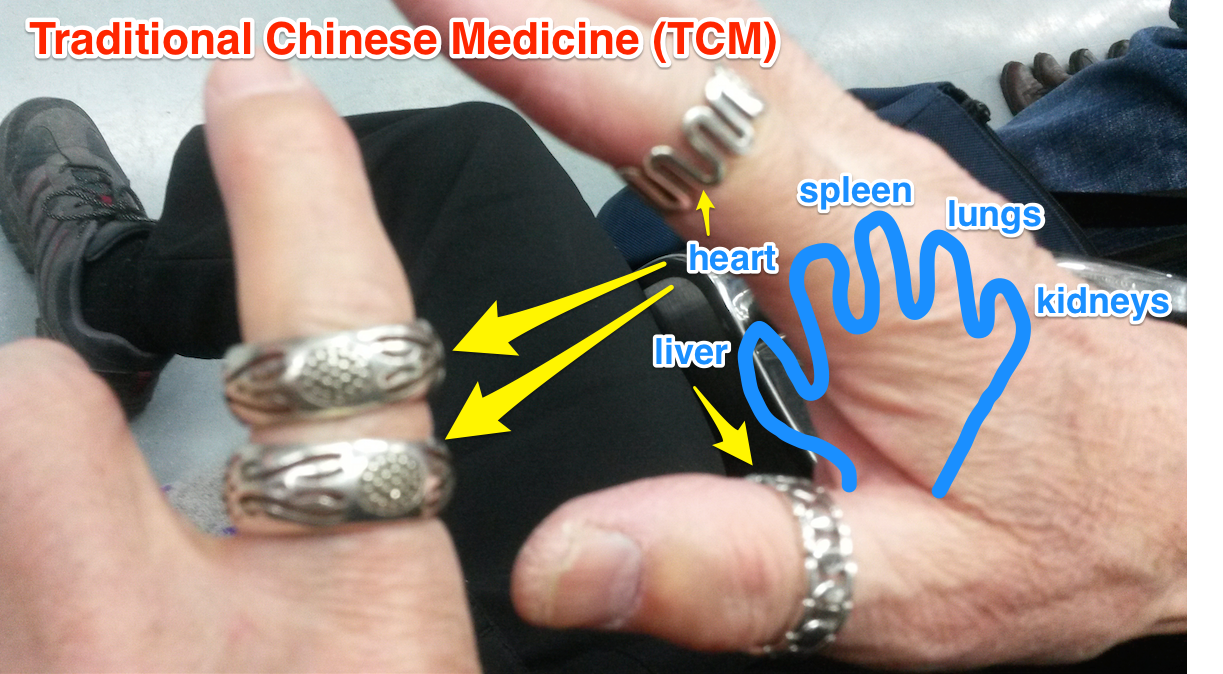
TCM and Silver Rings

On the subway sat beside an old Korean Vietnam War vet who spoke street English and was hilariously garrulous. The guy proceeded to tell me the meaning of the station names as we passed them, and then the preventative health benefits he got from wearing silver rings in key positions on particular fingers. Unfortunately he had to get off the train before I got the meaning of his fine set of flashy silver teeth, which probably were worn for health benefits too. Anyway, the location of his silver rings were for prevention of illness and disease, beliefs stemming from hanyak which is also rooted in traditional Chinese medicine. Each finger constitutes a different organ region and he was embracing the preventative measures that silver ring-wearing on appropriate fingers could activate and enhance. He was garrulously proud of his preventative health measures! 

thumb = liver
index finger = heart
middle finger = spleen
ring finger = lungs
pinky = kidneys


OK, so looked up the health benefits of wearing silver rings, and found some more modern Western scientific beliefs:
Silver is an antimicrobial agent that aids in cold and flu prevention, wound healing, and skin care. It helps with internal heat regulation and circulation, and even when used with correct quantity (whatever that is) it provides protection agains harmful electromagnetic radiation from cellphones and other electronics.  
Basically, it has electrical and thermal conductivity; that is, it can generate an electrical field that distributes electricity and heat around the body. The positively-charged silver ions create a conductive field that reflects electromagnetic radiation away from the body, much like a mirror reflects light. Meanwhile, the field stimulates the body's existing conductivity, improves blood circulation, temperature balance, and general healing. The positively charged ions also bind to negatively charged oxygen receptors in bacteria, destabilizing their metabolic enzymes and causing them to suffocate.
For some Ayurvedic health tips on bodily uses of silver watch the YouTube clip "Health Benefits of Silver". Korean traditional medicine beliefs stem from Chinese medicine, but Ayurvedic and Chinese do share many beliefs. Some interesting Chinese medicine additions on silver are that it is connected to the moon and has yin modalities. As for its color, it is believed to stimulate calmness and tranquility, evoking reflection, coolness and space.

Tuesday, November 24, 2015

Dr. Royer: Traditional Korean Medicine

Dr. Raimund Royer, KMD, PhD, who is the Head of the International Clinic at Jasaeng Center for Alternative Medicine, gave an introductory lecture at the Itaewon Global Village Center on what is traditional Korean medicine and a bit on its efficacy.

In Korea, there are two kinds of medical therapy. One is the Western medical science called “yangbang”, and "hanbang" is for the Korean traditional medical treatment system. Similar to other Asian therapies, hanbang utilizes natural components to cure the human body. Instead of removing or focusing treatment on bad parts of the body, it tries to strengthen related organs and help the body to overcome the disease itself.

The philosophy behind Korean medicine, along with other Eastern medicines, is based on three points of view:
  • Universal view: Everything is a unique entity.
  • Nature is motion: Motion is change; motion is qi.
  • Nature is interrelated: Everything is somehow related to everything else.
Source
The five elements reflect on aspects of the whole body, and when the elements are in balance, the yin and yang of the body are also well balanced with the overall outcome being a body filled with the vitality of the elements in good flow and circulation and therefore being in a state of good health.


The above picture might suggest that traditional Korean medicine is simplistic, when in actuality it is a complicated system of yin and yang, ebb and flow, 27 pulses, and a whole lot more. A chart characterizing the normal relations between the five elements is below. [Click to enlarge]


WOOD - yang power
  • Beginning, like in spring when sprouts break through the soil, and new life comes into existence.
  • Strong upward and spreading character
  • Viscera: liver -- birth, spring, wind, tendon, eye, anger
FIRE - yang power
  • The yang energy reaches the extreme, as in nature, flowers bloom.
  • Heat 
  • Viscera: heart -- spirit, blood vessels, tongue, joy
EARTH - yin and yang power
  • Earth harmonizes with wood, fire, metal and water.
  • In the circle spectrum, earth holds center position and has energy to change and transform external growth into internal maturity.
  • Viscera: spleen/pancreas -- digestive tract, energy supply for whole body, flesh, lips, thinking
METAL - yin power
  • Solid and cold
  • Growth of spring and summer stops, fruits ripen
  • Dispose of unnecessary things
  • Viscera: lungs -- respiration, skin, nose, voice, sadness/grief
WATER - yin power
  • Cold and icy
  • Water stores all energy and essences and prepares for new spring
  • Mostly yin character but contains yang energy too for preparing for spring
  • Viscera: kidneys -- storage of vital essence, vitality, bones, ear, hair, sexuality, fear

Qi (Vital Energy) and Meridians
  • Basic energy element that constitutes the cosmos
  • Produces everything in the world through its movements, changes and transformations
  • In the human body, the refined nutritive substance that flows within the human body
  • Circulates in a circuitry system much like the Seoul subway lines; the system connects organs, extremities and all tissue.
  • Accu-point - Certain point along a meridian that strongly responds to stimulation; considered as a reservoir of qi with high therapeutic response.

Deficiencies

Qi deficiency
Fatigue and low energy
Sweating even without exercising
Weak pulse
Hernia
Blood deficiency
Pale face, lips and nails
Light-headedness, tinnitus, palpitation
Irregular periods, reduced flow, in severe cases no menstruation
Yin deficiency
Weight loss, dry mouth, dry skin, tinnitus
Dizziness, palpitations, anxiety, sleeping disorder
Night sweating
Sexual dysfunction
Yang deficiency
Feels cold
Cold feeling in lower back and knees
Weak in legs with walking problems
Diarrhea, frequent urination
Low sexual function
Principle of holistic medicine

The human body possesses innate recuperative power so treatment is to (1) promote individual health via the treatment of organic dysfunction, and (2) harmonize the mental state and social relationships.

Herbal Medicine

The basic idea is that each plant, mineral, etc. has certain characteristics and energetic properties
Example: Ginseng
  • Qi-tonifying medicinal with over 200 active chemical substances
  • Flavor - sweet, bitter
  • Qi - warm
  • Meridian/organ entry - spleen/pancreas, lungs, heart
  • Effect - dispels fatigue, sexual dysfunction, digestive problems, anxiety
In using herbal medicine, the recipe consists of different herbs as based on each individual's needs. The 8 main therapeutic purposes for using herbals are:
  1. Perspiration - induces sweating
  2. Emetic - induces vomiting
  3. Purgative - promotes defecation
  4. Harmonization - balancing
  5. Warming - supports yang energy
  6. Heat-clearing - reduces internal heat
  7. Tonifying - treats qi, blood, yin and yang deficiencies
  8. Resolving - dispenses sores, ulcers, etc. 
Bee venom therapy, for strong anti-inflammatory pain relief and for strengthening the immune system, is also used. Pharmacopuncture also figures into traditional Korean medicine and is used for pain control and supporting muscles/ligaments along the spine.

Dr Royer checking the pulse -- three pulses on the left wrist and three more on the right.
Each pulse corresponds to a different organ.

Wednesday, September 18, 2013

Chinese Teas & Their Effects on the Body

There are many kinds of Chinese teas, but this presentation concerns six of them, classified by their color: Green tea, White tea, Yellow tea, Blue (ulong) tea, Red tea, and Black tea. Each of the teas are comprised of different ingredients - well, different leaves or preparations of leaves - and each tea has a specific effect or effects on the body.

Green Tea

Ingredient: made with unfermented green leaves

Effects: good for skin care, relieves hangover, inhibits the growth of cancer cells and reduces high blood pressure, promotes higher good cholesterol in the body


White Tea

Ingredient: young tea leaves with fuzz

Effects: has health benefits such as weight loss and cooling the body of excessive heat


Yellow Tea
Ingredient: unfermented tea leaves

Effects: promotes digestion (good for indigestion and lack of appetite), helps with weight loss, helps prevent cancers [effects are very similar to those of green tea]


Blue (ulong) Tea

Ingredient: lightly fermented tea leaves

Effects: has anti-cavity qualities from the blue enzymes, removed active oxygen which affects the aging of skin, relieves skin allergies, and strengthens the immune system by discharging alien substances from the body


Red Tea

Ingredient: fermented tea leaves

Effects: has anti-aging qualities primarily with helping to prevent aging of skin, has anti-cavity qualities because of polyphenols, helps with fatigue recovery and boost metabolism, helps discharge heavy metals from the body, helps with weight loss

Black Tea

Ingredient: fermented tea leaves

Effects: increases metabolism, strengthens the immune system with its polyphenols, helps break down fats, sterilizes many germs coming into the body


OTHER TEAS - THESE ARE FOR GENDER SPECIFICS


Rubus coreanus miguel Tea
(복분자 - very similar to the raspberry)

Ingredient: rubus berry

Effects: improves eye sight and memory, increases sexual stamina, induces urination

Cautions: possible allergic reaction, should not be consumed by people with hot body types as the tea increases heat, do not overeat

Cultural comments: Viewed as a men's tea, or at least is considered especially for men. Also for people with low "heat". This tea supposedly originated in a Korean fairy tale in which an old man takes a pee in a chamber pot and pee-ed and pee-ed and pee-ed. This pee-ing business is based on Korean traditional belief that pee-ing a lot symbolizes virility and man's ability.


Samul Tea (four medicine tea)

Ingredients: dong quai (당귀), boiled foxglove (숙지황), cnidium (천궁), white peony (백작약)

Effects: good for anemia, supports the uterus, prevents cramps, promotes healthy skin and a slim body

Cultural comments: best for women as it promotes good blood flow and for those with a "shortage of blood" (anemia). The 동귀보검, an historic 25-volume set of books compiled on health and medicine originally referred to samul tea as samul tang, suggesting it was more for medicinal purposes originally and not really something to enjoy with a meal.


Some Comments

(Comments in regard to the 6 types of Chinese teas) The present trend in the health world is to discuss the positive aspects of a marketed item, and teas and other beverages in Korea (like coffee and sports drinks and more) have become heavily discussed as to their "health" benefits. What is hardly ever mentioned is the fact that all these drinks have side effects on the body with some teas adversely affecting people with some diseases ... just an observation. The presentation was considered very good as a cultural presentation of traditions, but would lacking if the assignment were based on health aspects ... many people confuse these two aspects of judging/evaluating a presentation. Purpose of the presentation must be clear, and here the purpose was to give a cultural representation of something in a "food" category.

The information in this presentation (actually two separate presentations) was the research of notes and pictures from my students Oh Eun Jung and Eom Yun-sik (the six kinds of teas based on color) and Baek Ki Tae and Kim Woo Hee (teas for genders). Their presentations were very interesting and provided a lot of "food for thought".

Wednesday, September 19, 2012

Yin & Yang of 6 Medicinals

When Chinese, Koreans and many people of Asia, who have beliefs in hot and cold theories, are treating ailments and diseases, they first must understand the body constitution of the patient.


To know the body type, evaluating the physique, studying the diet with preferred foods and preferred temperatures of foods when eating, taking the pulse, and a few more points are taken into collective consideration before a body type "diagnosis" is pronounced. To be specific, there are 2 yang or warm body types (a greater and a lesser) and there are 2 yin or cool body types (again, a greater and a lesser). Only when the correct body type is ascertained can medicinals be prescribed.

3 Warm Herbs / Medicinals (Yang 陽)

Ginseng - Ginseng is used to reduce stress, improve the digestive function, reduce fatigue, fight against colds and infections; mountain or wild ginseng is seen as far better than cultivated ginseng and the price in the thousands of dollars that a single wild ginseng plant brings in reflects this belief. A caution, however, for people wanting this cure-all is that people with dominating yang should avoid the plant, or their body balance will be blown with excessive heat.

Velvet Deer Antler - Deer antlers in the velvet are another warm medicinal with a more than 2000 year old medicinal history. Deer antlers commonly figure in medicinal compotes as they supposedly relieve arthritis pain, inflammation, support joints and improve blood circulation. They are pretty much viewed as enhancing the entire immune system. A caution when using deer antlers as a medicinal is to avoid alcohol.

Caterpillar Fungus (동춘화초) - Caterpillar fungus is one of the many fungi in Asia that has medicinal healing factors. This particular kind of fungi is believed to protect against lung and kidney problems, and also to help in the prevention of cancer. Cautions for this are unknown.


Cool Herbs / Medicinals (Yin 陰)

Adlay also known as Job's Tear (율무) - Adlay is a gluten-free grain not commonly cultivated in Korea or until recently enjoyed as a grain. It predominantly figures in the sweetened instant drink 율무차. Adlay is believed to be good for the metabolism and promotes good blood circulation. Recently it has taken on the extra meaning of being beneficial for dieting and weight loss. There are two cautions for this grain. People who have cool constitutions are very much affected by the cooling affects of this grain. Likewise, preganant women should avoid as it "cools" the blood which affects the fetus.

Mung Beans (녹두) - Mung beans are believed to be very beneficial for detoxing the body and improving urination. They also help sick individuals recovery their health and improve the actions of the organs in the body. Mung beans are not to be taken with chemical medicines as through interaction they may reduce the effects of the intended treatment outcome.

Gardenia Seeds (치자) - Gardenia seeds are a cooling "herb" for reducing an internal fever, and according to the 동귀보감 they are especially helpful for improving liver function. A secondary outcome when taking them is the lowering of one's blood pressure. They also can help depression and soothe blood shot eyes. The only mentioned caution for gardenia seeds is the likelihood of a diarrhea.


This interesting piece of research was done by my students Doyoung Lee and Sojung Oh. Although there are sooooo many types of yang and yin medicinals, the students prefaced their presentation with choosing six, three from both of the yin and yang categories, to explain to the audience for tips on how to improve their own or their family members' health.

Thursday, November 3, 2011

Oriental Raisin Tree (헛개나무)

My friend, Yoon, and I have been doing cultural sharing on healing herbs and practices in our native countries. I'm fascinated with the oriental herbs and the huge herb markets displaying bursting bags and baskets of musty smelling barks and roots that the older generations oggle and haggle over. Wandering the herb markets is a delight for me, but I'm not satisfied with just the visual culture ... I want to KNOW the beliefs behind them!

On the 헛게나무 or Oriental Raisin Tree

The 헛개나무 is common to oriental medicine, referred to in Korea as 한의약 (Korean medicine), and so it is readily available in herb and open air markets and in the 5-day markets which specialize in medicinals. Probably the biggest reason for its popularity is due to the huge drinking culture in Korea. With so much indigestion, stomach upset and malaise from binge drinking, the boiled pulp and bark of the 헛개나무 ease hangovers and detox the liver. It is believed to be great for alcoholics and particularly helpful for treating the fatty liver.

To make the post-alcohol detox drink, add 50 grams of sliced 헛개나무 to 2 liters of water and bring to a boil. Once it begins to boil, turn the heat down and simmer the liquid for 2 hours with the lid opened or removed (for releasing toxins). After the liquid has been simmered for 2 hours, it is ready to drink. Though drinking it hot or cold effects the body the same, most people prefer to drink the liquid chilled and as if it were water, that is, throughout the day. There doesn't seem to be any limit on how much a person can consume in a day but my gut feeling parallels the cliche "too much of a good thing" isn't good. The woody plant can be boiled several times for extracting the healing properties, but 2 or 3 times at the very least.

The 헛개나무 is also believed to be great for releasing stress, lowering high blood pressure, counteracting jaundice, constipation and diabetes. As already said, it is great for the hangover and upset stomach so marketing, to exploit this belief, has happily created a 헛개나무 yogurt. Older people also use it when boiling meat in order to "clean up" the meat and remove bad tastes and toxins. Even the fruit of the 헛개나무 has its purpose -- it is used in Oriental medicine, particularly when doing acupunture (although Yoon wasn't certain exactly how).


The web is filled with places to purchase 헛개나무, the fruit, the bark (pictured above), the leaf. Of course it's available through GMarket -- hey, what isn't?! But because of its popularity in the Korean culture, there is even a market that specializes in the woody plant: http://hutgenamu.com. This site markets the domesticated plant substances, the really wild plant substances -- 헛개나무 껍질, the skin/bark of the tree, which is marketed at ₩50,000/kg -- and even the 헛개나무 얼매 or fruit of the tree, which sells at ₩130,000/60 fruit juice packets.

Sunday, October 23, 2011

Sunday at the Riverside

Spring and fall when the weather is bright and sunny, the riverside is swarming with people, especially on weekends. This Sunday was gorgeous after a slightly chilly spell so the riverside wasn't as packed, but it certainly was filled with entertaining activities for people to watch or participate in!

Bee-sting Therapy

Many times through the spring, summer and now the fall I've seen middle-aged and elderly people collecting bees. I'm passionately interested about the therapy used, how to do it, how effective and so many questions. Most people haven't talked with me - some because maybe they didn't want to, but others seem to feel that the foreigner just won't understand. Today this gentleman was really helpful and informative. Yeah, I certainly didn't understand everything and he wasn't very talkative but he sure did give me a lot of info about his collecting method which he feels is superior to others. [I agree. Others have used tweezers to snatch bees badly damaging the ones they catch as well as the very high percentage that gets away; others have places a baggy over the flower and bee and shook the bee to the bottom of the deep baggy where others were balled up, of course injuring the bees with all the rough shaking and them being compressed in such a small tight hot space; others use bottles but none as confidently or gently as this guy!]


He uses sugar cubes stuck inside the plastic water bottle so that caught bees won't get hurt or want to fly out when he's trying to grab others. Small holes allow ventilation and he doesn't bang the bees around and injure them, because he's collecting them for therapy, bee-sting therapy. He tries to get at least 25 stings for effective therapy. I didn't understand what the problem he was exactly treating but rheumtism and "places where people ache" seem to cover it. My friend in the states who has fibromyalgia says the beestring therapy she tried was somewhat helpful, but I've never talked with anyone in Korea who has explained more about the therapy on a deeper level, and where the idea and treatment came from. It's certainly another fascinating aspect of either traditional Chinese or Korean medicine!

Drum Concert

Events like picnic fundraisers, concerts and competitions are held at one of the many riverside park areas. Today there was a rousing drum concert with precision repercussion power rolling from the throats of the drums. Absolutely loved it! I think it was for a fund-raiser for perhaps physically and mentally handicapped youth and their families. Many young people with evidence of cerebral palsy, Mongoloidism, and other disabilities were swarming the area with care-givers, volunteers and family in attendance. The drum concert was one of the beginning events held and other musical events followed. Food tents were set up busting with people preparing hot "picnic foods" over bunsen burners.


[Kimbap boxes made early in the morning by some small company used to be the traditional picnic food but now people actually bring in cooking equipment and make hot food. Kimbap is not so commonly seen anymore as street food either ... and I really miss it. But according to my friends, cheap oils are used in making kimbap so people shouldn't eat it. And my thoughts, and cheap oils at high temperatures aren't used for making the now ubiquitous and very fattening fried street foods? Or white bread colored with caramel coloring is better for you than rice? I don't get it. Why spurn what one knows for something unknown but which tastes better, but in the long run will do a lot more harm to the body? Sigh.]

Kite Flying

Kite flying offers surprising constrasts in Korea. In the US children like playing with kites in the summer. However, in Korea children do like playing with kites but this has been traditionally a winter sport. With the right winds blowing on cold winter days making a blue cloudless sky, the wind and sky were perfect for enticing a colorful display of kites high. Also traditionally there were kite fights, but I'm not sure in what period they took place, which ethnic group introduced them or whether they originated in Korea. But what did take place traditionally long ago in Korea was a special kite flying on Lunar New Year's day. Children would fly kites in the sky, make a wish and then cut their kite strings to release their kite, aka wish, in hopes of having their wish be realized. I've heard that this tradition was causing a lot of kite trash around [much like releasing balloons in the atmosphere] so the government put a stop to it. As best as I can tell, this tradition stopped sometime in the 1980s.

Anyway, kite flying has become an activity for elderly men, and today there were three out flying their kites. There was also a father teaching his little girl how to fly a simple kite, but he sure seemed more interested in flying it than she. She quickly lost interest because she couldn't get it up in the air, not surprising since the elderly pros were really struggling too. What I love about these picts is the string cradle that Koreans use for easily spinning to allow quick soaring flights or to harness in a falling kite. Korea is famous for their kite skills and kite making is something that all Korean children learn in kindergarten and elementary school, kite making with kites that look like the Korean flag. Even festivals frequently offer this as a craft option.


Korean Croquet

I wish I knew the name of this "sport" but it definitely looks like croquet until you watch for a couple of minutes, then you begin to wonder why players sometimes overlap playing time, seem to hit more than they should, and the way they play in teams is REALLY confusing. However, this is definitely an old people's game. I have never, ever seen anyone under 50 playing. Women do enjoy it, but men thrive on it and play pretty much in all four seasons. For that reason, all along the long riverside bike trails is a quite occasion croquet court. The courts usually appear in areas near large apartment complexes, and they get a lot of grooming to maintain their flat, unscuffed appearance. There's one particular court where a gentleman plays and thinks I should hit the ball for "experience". I never have because I plainly don't understand their rules; they're different than how I learned croquet, and if I'm going to hit the ball, I'm going to play a whole game ... maybe not skillfully, but knowledgeable at least.


Car Racing

Racing remote control cars is the latest craze along the riverside. Old and young alike line up in droves to watch people "drive" their remote cars around and around and around and around in circles. Hypnotizing indeed! The cars aren't racing really; they're just going around, making maneuvers, and sometimes jumping. Nothing exciting but crowds get attracted. I have to smile. People go to the riverside for exercise, but this is the most sedentary activity here ... and with lots of people doing it - nothing!


Playing ball and Fishing for ball

Loads and loads of guys make teams and play ball, or vigorously practice solo shots. Really blood pumping workouts! Well, today another ball bounced into the dirty river, and one of the local fishermen was recruited to help. That fisherman was good at throwing his line just on the other side of the ball, but the slight current was pulling the ball away and eventually the poor fisherman had to admit defeat ... and another ball now bobs in the middle of the river. It just wouldn't be Sunday without adding at least one ball to the river!